Miter Saw Makes Grinding Noise: Causes And Fixes
A miter saw makes grinding noise when its blade, bearings, motor, or guard has a mechanical problem.
A miter saw makes grinding noise for several reasons, and the sound often gives clues about the fault. A light scrape may come from the blade guard, while a harsh growl can point to worn bearings, damaged gears, or motor trouble. This guide explains how to find the cause safely, what you can fix at home, and when professional repair is the better choice.
Why a Miter Saw Makes Grinding Noise
A miter saw should produce a steady motor hum and a clean cutting sound. It should not sound like metal stones rubbing together. If a miter saw makes grinding noise, stop cutting and inspect it before the issue causes more damage.
The most common causes include:
• A blade rubbing against the blade guard or throat plate
• A loose blade, washer, or arbor nut
• Worn motor bearings
• Damaged gearbox teeth
• Carbon brushes that are worn or stuck
• Dust packed around the motor or gear case
• A bent blade or arbor
• A faulty blade brake or lower guard
• A damaged belt on models that use belt drive
The location and timing of the noise matter. A grinding sound only during startup may suggest motor or brush trouble. A noise that grows with blade speed often points to bearings, the arbor, or the gear system.
In my workshop, I once found that a loud “bearing” noise was caused by a small screw trapped under a blade washer. The lesson was simple: check the easy parts first before opening the motor housing.

Stop Using the Saw and Check Safety First
When a miter saw makes grinding noise, unplug it before touching the blade or removing any cover. Do not rely only on the trigger switch, because a faulty switch or stored electrical energy can create a serious risk.
Follow these steps:
- Release the trigger and wait for the blade to stop fully.
- Unplug the power cord or remove the battery.
- Lock the saw head in its raised position.
- Wear safety glasses and cut-resistant gloves when handling the blade.
- Keep your fingers away from the teeth, even when the blade is still.
- Read the saw’s owner’s manual before removing guards or motor covers.
Do not test the saw with the guard removed unless the manual allows that procedure and you fully understand the risks. A spinning blade can throw dust, broken teeth, or loose parts in an instant.
The Occupational Safety and Health Administration advises using machine guards and disconnecting power before servicing equipment. That principle applies at home, in a garage, and on a professional job site.

Inspect the Blade, Arbor, and Blade Guard
A blade problem is one of the fastest and simplest causes to correct. A bent blade, loose arbor nut, or incorrect blade size can make a miter saw makes grinding noise during operation.
Remove the blade only after disconnecting power. Then inspect these parts:
• Blade teeth for cracks, missing tips, or uneven wear
• The blade body for warping or bends
• The arbor hole for damage
• The inner and outer blade washers for dirt or distortion
• The arbor nut for proper tightness
• The throat plate for deep cuts or contact marks
• The lower guard for free movement
Spin the blade slowly by hand. It should turn smoothly without side-to-side wobble. Do not force the blade if it catches. A rough spot can indicate a bent arbor or damaged bearing.
Check the blade direction as well. Most miter saw blades have arrows that show the correct rotation. An incorrectly installed blade may cut poorly and create unusual vibration, although it does not always cause a true grinding noise.
A common mistake is using a blade with the wrong kerf, arbor size, or diameter. Always match the blade to the saw’s specifications. The manual usually lists the correct blade diameter, arbor size, maximum speed, and tooth type.

Look for Rubbing or Contact Marks
If a miter saw makes grinding noise only when the blade spins, search for shiny marks. Fresh metal marks often show where two parts touch.
Inspect the following areas:
• The edge of the blade guard
• The throat plate opening
• The dust chute
• The blade washer
• The arbor housing
• The fence near the blade path
Lower the saw head slowly with the power disconnected. Watch the guard as it moves. It should open and close without sticking, scraping, or snapping back slowly.
Wood dust can collect inside the guard hinge. This may stop the guard from moving freely and make it rub against the blade. Use a dry brush or compressed air according to the manufacturer’s instructions. Avoid spraying oil on the guard unless the manual specifically recommends it.
Never enlarge the throat plate with a file just to stop a noise. If the plate is damaged or too tight, replace it with the correct part. A homemade adjustment can reduce support around the cut and create a new safety problem.

Check the Motor Bearings
Motor bearings support the spinning armature. When they wear, a miter saw makes grinding noise that often sounds like a deep growl, rough hum, or rumble.
To check for bearing trouble:
- Unplug the saw and remove the blade if the manual permits it.
- Turn the arbor by hand.
- Feel for roughness, tight spots, or side movement.
- Listen for a dry scraping sound.
- Check whether the motor shaft moves up, down, or sideways.
A healthy arbor should turn smoothly. Slight resistance from the motor may be normal, but the movement should feel even. Any noticeable wobble is a warning sign.
Bearings can fail from age, heavy use, dust, overheating, or a blade that has been forced through hard material. A failing bearing may become louder as the saw warms up. It may also create excess vibration and heat.
Replacing motor bearings often requires special tools and electrical knowledge. On many saws, the bearing is pressed into the motor housing. If you are not trained to service electric motors, use an authorized repair center instead of hitting the bearing with a hammer.

Examine the Gears and Gearbox
Many compound miter saws use a gearbox to transfer power from the motor to the blade. If a miter saw makes grinding noise from the gear case, the gears may be worn, chipped, dry, or misaligned.
Gear damage can result from:
• Cutting material that is too thick or hard
• Forcing the blade through a cut
• Using a dull or incorrect blade
• Running the saw with a loose arbor
• Low or contaminated gear lubricant
• A worn bearing that lets the gears move out of line
A damaged gear often makes a rhythmic grinding sound. The noise may repeat once per blade rotation or change as you press the saw into a cut.
Do not add random grease to the gearbox. Some gear cases need a specific lubricant, while others are sealed and should not be opened by the owner. The wrong grease can damage seals, attract dust, or affect the gear material.
If the gearbox has metal particles inside, replacing only the lubricant will not solve the problem. The damaged gear, bearing, or shaft must also be inspected. A technician can check gear alignment and measure shaft play more accurately than a visual inspection alone.

Test for Worn Carbon Brushes
Some corded miter saws use carbon brushes to transfer electric current to the motor. When brushes wear down, a miter saw makes grinding noise, buzzing, or crackling. The saw may also lose power, spark heavily, or stop at random.
Brushes are small, replaceable parts, but their design differs by model. Check the manual before removing a brush cap. Look for these signs:
• The brush is shorter than the service limit
• The carbon surface is chipped or uneven
• The spring is weak or damaged
• The brush is stuck in its holder
• The commutator is badly burned or grooved
A small amount of sparking can occur in brushed motors. Large sparks, smoke, burning smells, or a bright ring of sparks are not normal. Stop using the saw at once if you notice them.
Do not sand the commutator or install a random brush that looks similar. The brush grade, size, and shape must match the motor. After replacement, follow the manufacturer’s break-in instructions if they provide them.
Brushless cordless saws do not use carbon brushes. If a brushless saw makes grinding noise, focus on the blade, bearings, gears, electronic brake, or motor assembly instead.
Check for Dust, Debris, and Poor Lubrication
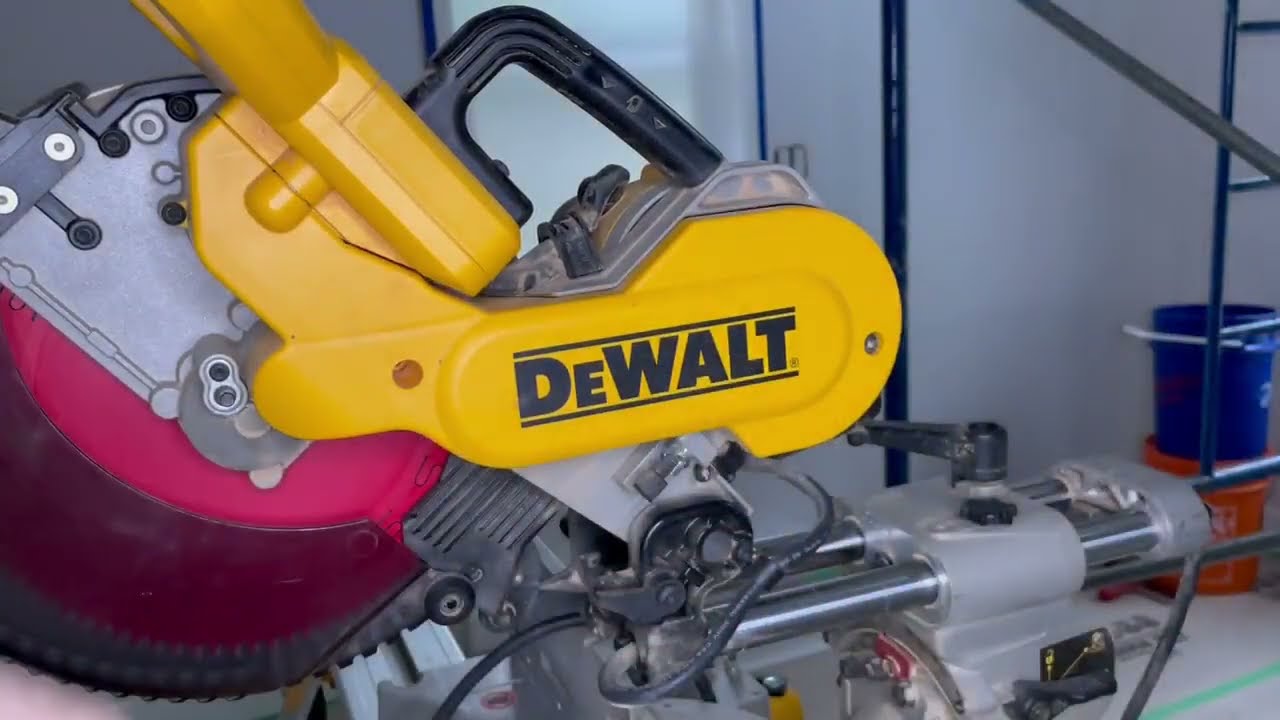
Fine sawdust can act like sand inside a power tool. It can block ventilation, collect near the arbor, and mix with grease inside a gear case. Over time, this may make a miter saw makes grinding noise.
Clean the saw with these methods:
• Use a soft brush around the guard and arbor
• Vacuum dust from vents and the table
• Use low-pressure air only where the manual permits it
• Keep the motor vents clear
• Remove pitch from the blade with a suitable blade cleaner
• Do not pour liquid into the motor or switch
Pine resin and other wood pitch can stick to the blade. This increases cutting resistance and heat. It may also make the saw sound strained, but pitch alone usually causes a dull hum rather than a true metal grinding sound.
Lubricate pivot points only with the product recommended by the manufacturer. Do not lubricate the blade, arbor threads, or brake parts unless the manual specifically says to do so. Oil in the wrong place can attract dust or reduce braking performance.

Use Sound and Timing to Find the Fault
The moment the noise begins can help identify the cause. When a miter saw makes grinding noise, note whether it happens at startup, during free spinning, or only while cutting.
Use this guide:
• Noise at startup: worn brushes, motor bearings, or electronic brake issues
• Noise during free spin: blade contact, arbor trouble, bearings, or gears
• Noise only under load: dull blade, gearbox damage, weak motor, or loose parts
• Rhythmic clicking: chipped gear tooth, damaged blade tooth, or loose hardware
• High-pitched squeal: dry bearing, belt slip, or guard contact
• Deep growl: motor bearing or gearbox wear
• Grinding with vibration: bent blade, arbor wobble, or loose blade assembly
Never hold a workpiece near the blade to “test” the sound. Run the saw only as described in the manual, with the correct guard and blade installed.
A short, controlled test can help, but repeated testing can turn a small fault into a major repair. If the sound becomes louder within seconds, unplug the saw and stop troubleshooting.
Repair Problems You May Be Able to Fix
Some causes of a miter saw makes grinding noise are safe for a careful owner to correct. Others require a trained repair person.
You may be able to handle these tasks:
• Replace a damaged blade
• Tighten the arbor nut to the manual’s instructions
• Replace a cracked throat plate
• Clean dust from the guard and vents
• Replace accessible carbon brushes
• Replace a damaged blade washer
• Adjust a fence that is rubbing the blade path
Always use genuine or manufacturer-approved parts when possible. A cheap washer or incorrect blade can create poor alignment and unsafe vibration.
Before reassembling the saw, check that every screw is present and tight. Confirm that the blade guard moves freely and that the arbor locks correctly. Make a test cut in scrap wood only after the saw runs smoothly without unusual sound.
In my experience, replacing a dull blade solves many “motor noise” complaints because users often push too hard during a cut. The saw is not a hand saw; it should remove material with steady pressure, not force.
Problems That Need Professional Service
Stop DIY repair and seek service when a miter saw makes grinding noise along with heat, smoke, sparks, or a burning odor. These signs may indicate an electrical fault, failing insulation, or serious motor damage.
Professional service is the safer choice when:
• The arbor is bent
• The motor shaft has side play
• The gearbox contains metal fragments
• The motor housing is cracked
• The switch or brake does not work correctly
• The saw trips a circuit breaker
• A cordless battery or charger becomes hot
• You cannot identify the source of the noise
• The repair requires opening a sealed motor or gearbox
Do not keep using a noisy saw because it still cuts wood. Mechanical parts can fail suddenly. A broken gear or bearing may lock the blade, damage the workpiece, or send fragments through the guard.
Compare the repair cost with the saw’s age and condition. For an older entry-level saw, a new tool may cost less than a motor and gearbox repair. For a high-quality professional saw, repair may be worthwhile.
How to Prevent Grinding Noise
Regular care can keep a miter saw quiet and accurate. Prevention is easier than replacing a motor.
Use these habits:
• Install the correct blade for the material
• Keep blades sharp and free from pitch
• Let the blade reach full speed before cutting
• Use steady pressure instead of forcing the saw
• Support long boards to prevent twisting
• Clean the saw after dusty work
• Inspect the blade and arbor often
• Keep the guard clean and mobile
• Store the saw in a dry place
• Follow the manual’s lubrication and service schedule
Do not cut metal, masonry, or treated materials unless the saw and blade are rated for that work. A wood-cutting blade can overheat or break when used on the wrong material.
A clean, sharp blade also improves cut quality. It reduces motor load, lowers vibration, and helps protect the gearbox. Think of the blade as the tires on a car: poor contact makes the whole system work harder.
A Simple Diagnostic Checklist
Use this checklist when a miter saw makes grinding noise:
- Disconnect power.
- Inspect the blade for damage or warping.
- Check the blade size, arbor hole, and rotation direction.
- Inspect the blade washers and arbor nut.
- Look for shiny rubbing marks.
- Move the lower guard by hand.
- Turn the arbor slowly and feel for roughness.
- Check for arbor wobble.
- Clean dust from the guard, vents, and table.
- Inspect carbon brushes if the model uses them.
- Listen for noise from the gearbox or motor.
- Stop and arrange professional service if heat, smoke, sparks, or strong vibration appear.
Write down when the noise occurs and what it sounds like. A recording made from a safe distance may help a repair technician, but do not record while reaching near the running blade.
Common Mistakes to Avoid
Many repairs become more expensive because the first inspection is rushed. Avoid these mistakes when a miter saw makes grinding noise:
• Running the saw with the blade guard removed
• Tightening the arbor nut far beyond the manual’s instructions
• Using a blade with the wrong diameter or arbor size
• Spraying oil into the motor
• Ignoring a burning smell
• Continuing to cut until the saw stops
• Replacing gears without checking the bearings
• Installing mismatched carbon brushes
• Using compressed air at excessive pressure
• Assuming every grinding sound comes from the blade
One mistake I have seen more than once is changing several parts at once. That makes it hard to know what fixed the issue and may waste money. Inspect, test safely, and change one likely part at a time.
Frequently Asked Questions of Miter Saw Makes Grinding Noise
Why is my miter saw making a grinding noise when it starts?
A startup grinding noise may come from worn motor bearings, carbon brushes, or the electric brake. Unplug the saw and inspect the blade and arbor first, then seek service if the noise continues.
Can a dull blade make a miter saw grind?
Yes, a dull blade can overload the motor and create a strained or rough sound. However, a true metal-on-metal grind usually points to blade contact, bearings, gears, or loose hardware.
Is it safe to use a miter saw that makes grinding noise?
No. Stop using it until you find the cause. Continued use can damage the motor, gearbox, blade, or guard and may create a serious safety hazard.
How do I know if my miter saw bearings are bad?
Unplug the saw and turn the arbor by hand. Rough movement, a growling sound, or side-to-side shaft play can indicate worn bearings.
Can I fix a grinding miter saw myself?
You may be able to replace a blade, clean debris, tighten approved hardware, or change accessible brushes. Motor bearings, gearboxes, electrical faults, and bent arbors are usually best handled by a qualified technician.
Why does my miter saw grind only during a cut?
Noise under load may result from a dull blade, excessive cutting pressure, gearbox wear, or motor trouble. Use the correct blade and light pressure, but stop if the noise remains.
Conclusion
A miter saw makes grinding noise when one or more parts are rubbing, loose, worn, or damaged. Start with safe power disconnection, then inspect the blade, guard, arbor, bearings, brushes, and gearbox in that order.
Simple issues may need only cleaning or a new blade. Heat, smoke, sparks, heavy vibration, and shaft play require professional service. Take the noise seriously, protect your saw with regular care, and share your symptoms or repair experience in the comments.