Bosch Jigsaw Not Working: Quick Fixes And Tests
A Bosch jigsaw not working is often caused by a power, battery, switch, blade, or safety problem.
A Bosch jigsaw can stop suddenly, run slowly, or refuse to start for several simple reasons. I have seen many cases where a tool looked “dead,” yet the real fault was a loose cord, a flat battery, a jammed blade, or a dirty trigger. This guide explains how to find the cause safely, fix simple problems, and know when professional repair is the better choice.

Start with safety
Before checking why your Bosch jigsaw is not working, disconnect it from power. Remove the battery from cordless models, and unplug corded models from the wall.
Do not touch the blade while testing the tool. Even a short movement can cause a serious cut. Wear safety glasses when checking the blade area, and keep the jigsaw away from children, water, and loose clothing.
Use this safe process:
- Unplug the jigsaw or remove its battery.
- Let the motor cool for 20 to 30 minutes.
- Remove the blade if it is bent, jammed, or damaged.
- Check the tool for smoke, melted plastic, or a burnt smell.
- Stop testing if you see sparks, damaged wires, or signs of overheating.
A damaged power cord or burnt motor is not a good do-it-yourself repair. Bosch tools contain electrical parts that can remain hazardous if handled incorrectly.

Why is my Bosch jigsaw not working?
The most common causes are easy to check. A corded model may have no power at the outlet, while a cordless model may have a flat battery or a charger fault.
Other common causes include:
• The power switch or trigger is stuck
• The battery is empty, damaged, or too hot
• The blade is jammed in the workpiece
• The blade is bent or fitted incorrectly
• The motor has overheated
• The carbon brushes are worn on an older model
• The speed control is set too low or has failed
• The cord, plug, or battery contacts are damaged
• The electronic controller has a fault
• Dust has entered the switch or motor housing
A Bosch jigsaw not working does not always mean the motor has failed. Think of the tool as a chain. Power must travel from the outlet or battery, through the switch and controls, into the motor, and then to the blade. One broken link can stop the whole tool.
Check the power supply first
Power problems are the fastest faults to rule out. Plug another small tool or lamp into the same outlet. If that item also fails, reset the circuit breaker or try another outlet.
For a corded Bosch jigsaw, inspect the plug and cord from end to end. Look for cuts, flattened sections, loose insulation, or dark marks near the plug. Do not use the jigsaw if the copper wire is visible.
For a cordless model, check the battery display. A battery may show one bar but still lack enough power for a heavy cut. Put it on the correct Bosch charger and wait until the charger shows a full charge.
Also check these points:
• Make sure the battery clicks fully into place.
• Clean dirty battery contacts with a dry cloth.
• Try a second compatible battery if one is available.
• Confirm that the battery is not too hot or too cold.
• Check that the charger is connected and its indicator behaves normally.
• Do not use a battery with cracks, swelling, leaking, or a burnt smell.
Some Bosch cordless jigsaws use battery protection electronics. These systems may shut the tool down when the battery is too hot, too cold, overloaded, or deeply discharged. Let the battery return to room temperature before testing it again.

Inspect the blade and blade holder
A jammed blade can make a good jigsaw appear dead. If the blade binds in thick wood, the motor may stop to protect itself. A dull blade also creates more heat and force, which can trigger overload protection.
Remove the blade before inspecting the holder. Check for:
• A bent or cracked blade
• Teeth filled with resin or dust
• A blade fitted backward
• A blade that does not match the material
• A loose blade clamp
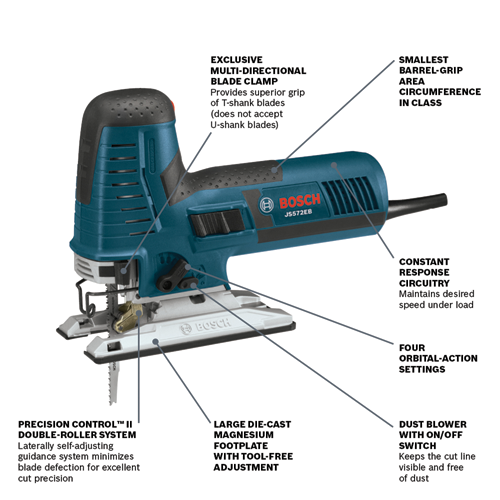
• Debris inside the quick-release holder
• A blade that cannot move freely up and down
Fit a new blade if the old one is dull or damaged. Use a wood blade for wood, a metal blade for metal, and a fine-tooth blade for clean cuts in laminate or plastic.
I once found that a “dead” jigsaw had a short blade trapped in a knot of hardwood. The user kept pressing the trigger, which made the motor hotter but did not free the blade. The lesson is simple: if the blade stops, release the trigger at once and inspect the cut.
Never pull a stuck blade with the motor running. Remove the jigsaw from the material, disconnect it, and free the blade by hand.
Test the trigger and speed control
If the Bosch jigsaw has power but does not start, the trigger or switch may be the problem. Dust, dried resin, or wear can prevent the switch from closing the electrical circuit.
With the tool disconnected, press and release the trigger several times. It should move smoothly and return without sticking. Check the lock-on button too. A locked or damaged button can affect normal trigger operation.
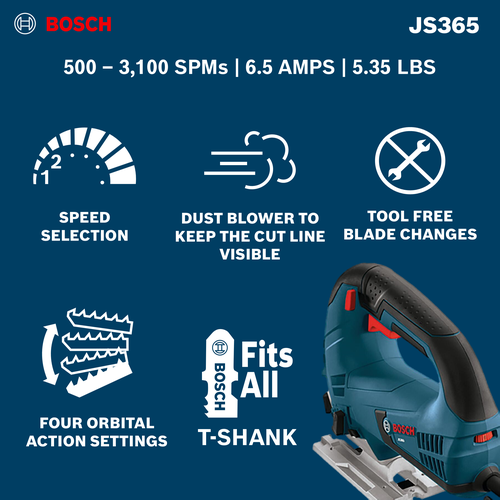
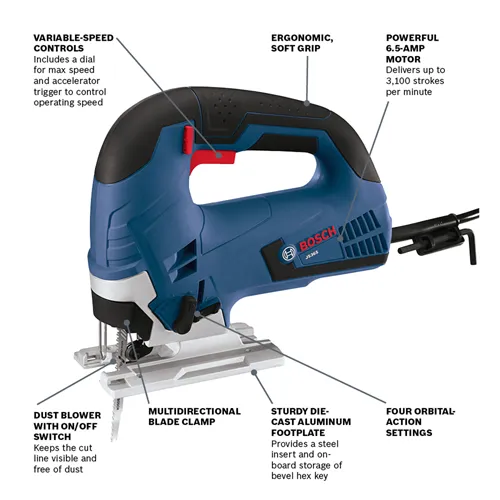
Many Bosch jigsaws have variable-speed control. If the speed dial is set very low, the blade may move so slowly that it seems inactive. Turn the dial to a middle setting and test the tool without a load.
Do not spray oil, water, or general-purpose cleaner into the switch. These products can damage electrical contacts or create a fire risk. If the trigger feels loose, gritty, or unusually hot, arrange a proper repair.
A switch fault often needs a replacement part. Opening the housing can expose live terminals, sharp edges, and small parts that are difficult to reinstall correctly.

Allow the motor to cool
Overheating is another common reason for a Bosch jigsaw not working. The motor may stop during a long cut, especially when cutting thick wood, hardwood, or metal.
Look for these signs:
• The housing feels very hot
• The tool stops during a hard cut
• The motor smells hot or burnt
• The jigsaw works again after cooling
• The motor slows before stopping
Release the trigger and let the tool cool in a clean, dry place. Do not place it in a freezer or spray it with water. A sudden temperature change can cause condensation and damage electrical parts.
To prevent overheating, use the correct blade and let the blade do the work. Do not force the jigsaw through the material. Make short pauses during long cuts, and keep the air vents clear.
If the tool overheats during light work, the problem may be deeper. Worn brushes, blocked vents, damaged bearings, or a failing motor can all create excess heat.
Clean the vents and remove dust
Wood dust is small, but it can cause large problems. It may block cooling vents, affect the trigger, or collect around the motor and electronic controls.
Disconnect the tool before cleaning. Use a soft brush or low-pressure compressed air around the vents and blade holder. Keep the air nozzle several inches away so you do not force dust deeper into the housing.
Avoid these cleaning mistakes:
• Do not wash the jigsaw with water.
• Do not use a wet cloth near the switch.
• Do not use high-pressure air close to the motor.
• Do not scrape contacts with a sharp metal object.
• Do not operate the tool with its covers removed.
After cleaning, check whether the Bosch jigsaw is working again. If it starts but makes a grinding sound, produces heavy sparks, or smells burnt, stop using it.

Check for worn carbon brushes
Some Bosch corded jigsaws use carbon brushes to transfer power to the motor. These brushes wear down over time. A tool with worn brushes may start and stop, run weakly, or produce visible sparks.
Possible brush symptoms include:
• Intermittent operation
• Reduced cutting power
• A crackling sound
• Large sparks near the motor
• A burnt smell
• The tool working only when held in one position
Not every Bosch jigsaw uses replaceable brushes in the same way. The exact design depends on the model and production year. Check the model number and the official parts diagram before ordering parts.
Brush replacement may be suitable for an experienced repairer. However, incorrect installation can damage the armature or create an electrical hazard. If you are unsure, use an authorized service center or a qualified tool technician.

Consider electronic protection and overload faults
Modern Bosch jigsaws may use electronic controls to manage speed, temperature, and battery protection. These systems can shut the tool down when they detect a dangerous condition.
A temporary shutdown may clear after you:
- Release the trigger.
- Remove the battery or unplug the tool.
- Remove the blade from the material.
- Let the tool and battery cool.
- Check for a blocked blade or dirty vent.
- Reconnect the power and test with no load.
If the tool shuts down again during easy work, do not keep forcing it. Repeated resets can make a small fault worse.
A failed circuit board, motor sensor, or speed controller is not usually a simple home repair. The repair cost may also depend on the age and value of the jigsaw. Ask for a written estimate before approving major work.
What to do when the Bosch jigsaw runs but cuts badly
Sometimes the Bosch jigsaw is working, but it does not cut as expected. A slow blade, rough cut, or wandering line can feel like a motor problem.
Start with the blade. Use a sharp blade designed for the material. A blade with fine teeth gives a smoother cut, while a coarse blade removes material faster in softwood.
Check the cutting setup as well:
• Support the workpiece close to the cut.
• Mark the line clearly.
• Keep the base plate flat on the material.
• Use the correct orbital action setting.
• Reduce orbital action for clean cuts and metal.
• Do not push faster than the blade can cut.
• Keep both hands away from the blade path.
A bent blade can make the tool pull to one side. A loose base plate can also cause poor results. Check that the plate is secure and set to the correct angle.
When should you stop troubleshooting?
Stop using the Bosch jigsaw and seek service if you notice smoke, melting, strong burning odor, severe sparks, exposed wires, or repeated electrical trips.
You should also seek help when:
• The tool remains dead with a known-good power source.
• A charged battery works in another tool but not the jigsaw.
• The motor makes a loud grind or clunk.
• The housing is cracked.
• The trigger is hot or damaged.
• The tool cuts out during light work.
• You cannot identify the model or correct replacement part.
The official Bosch manual is the best guide for model-specific details. It can show the correct battery type, blade system, safety steps, and service instructions. Avoid using parts that merely look compatible.
Repair is often worthwhile when the jigsaw is a professional model or has a simple switch fault. Replacement may make more sense when the motor, circuit board, and battery all need attention.
How to prevent future problems
Good care can keep a Bosch jigsaw reliable for years. Most failures begin with heat, dust, pressure, or poor storage.
Use these habits:
• Clean the vents after dusty jobs.
• Store the tool in a dry case or cabinet.
• Remove the battery during storage.
• Keep batteries away from extreme heat.
• Use sharp blades for each material.
• Do not force the cut.
• Let the motor cool after demanding work.
• Inspect the cord before every use.
• Charge batteries with the correct Bosch charger.
• Replace damaged blades quickly.
I learned this after a jigsaw failed during a cabinet project. The tool had been stored in a damp shed, and its contacts had begun to corrode. A dry storage box and a quick inspection after each job would have prevented the problem.
Treat the jigsaw like a small engine. Clean air, the right load, and regular checks help it run well.
Frequently Asked Questions About Bosch Jigsaw Not Working
Why is my Bosch jigsaw not turning on?
Check the outlet, power cord, battery, charger, trigger, and battery contacts. If these items are fine and the tool still stays silent, the switch, controller, or motor may need service.
Why does my cordless Bosch jigsaw stop while cutting?
The battery may be low, hot, or overloaded. A dull blade, thick material, blocked vent, or excessive pressure can also activate the tool’s protection system.
How do I reset a Bosch jigsaw?
Release the trigger, remove the battery or unplug the tool, and let it cool for several minutes. Inspect the blade and vents before reconnecting it; many models do not have a separate reset button.
Can a dull blade make a Bosch jigsaw stop working?
Yes. A dull or incorrect blade creates extra resistance and heat. The motor may slow down or stop because of overload protection.
How do I know if the Bosch jigsaw battery is bad?
Test the battery in another compatible Bosch tool, if possible. A battery that will not charge, becomes unusually hot, shows damage, or fails in several tools should be replaced or professionally checked.
Can I replace the Bosch jigsaw switch myself?
Some experienced users can replace a switch, but the job involves electrical parts and model-specific assembly. If you are not trained to work on power tools, use an authorized service center.
Conclusion
A Bosch jigsaw not working is often linked to a flat battery, poor power supply, jammed blade, overheating, dust, or a faulty switch. Start with safe checks, then inspect the blade, power source, vents, trigger, and cooling system.
Do not ignore smoke, burning smells, severe sparks, or damaged wiring. Use the correct Bosch manual and get professional help when the fault involves the motor, circuit board, or electrical system.
Try these checks before buying a replacement tool, and share your model number and symptoms in the comments if you need more focused troubleshooting advice.