DeWalt Jigsaw Won’t Start: Easy Fixes To Try
A DeWalt jigsaw won't start when its power source, safety switch, trigger, battery, cord, or motor has a fault.
A DeWalt jigsaw is usually easy to diagnose because the problem follows a clear path: power first, controls next, and the motor last. This guide explains why your DeWalt jigsaw won't start, how to test it safely, and when a repair is better than a replacement.
Start with safety and a quick inspection
Before testing a DeWalt jigsaw, remove the battery or unplug the tool. Never place your fingers near the blade, even if the jigsaw seems dead. A faulty switch can restore power without warning.
Set the tool on a stable bench and check the blade area. A bent blade, packed sawdust, or a damaged base will not always stop the motor, but these problems can make the tool seem unsafe or unresponsive.
• Check for a charged battery or a live outlet.
• Look for cuts, burns, or loose parts on the power cord.
• Inspect the battery contacts for dirt or damage.
• Confirm that the blade is fitted correctly.
• Check whether the trigger, lock-off button, or speed control feels stuck.
A simple visual check often finds the cause in less than a minute. Think of it like checking a car before blaming the engine.
Why your DeWalt jigsaw won't start
The most common cause is a power problem. A cordless model may have a flat battery, a poor battery connection, or a battery that has entered a protective shutdown mode. A corded model may have a damaged cord, a tripped breaker, or a failed outlet.
The next likely cause is the safety control. Many DeWalt jigsaws use a lock-off button or safety switch near the trigger. If that control is not pressed or released correctly, the trigger may not send power to the motor.
Other common causes include:
• A defective trigger switch
• Dirty or damaged battery terminals
• A failed electronic speed controller
• Worn carbon brushes on an older model
• A broken internal wire
• Motor damage from overheating
• A jammed armature or heavy sawdust buildup
The exact parts vary by model. A 20V MAX cordless jigsaw and a corded DeWalt jigsaw may look similar, but their power systems are different. Always check the model number and use the correct manual before ordering parts.

Troubleshoot a cordless DeWalt jigsaw
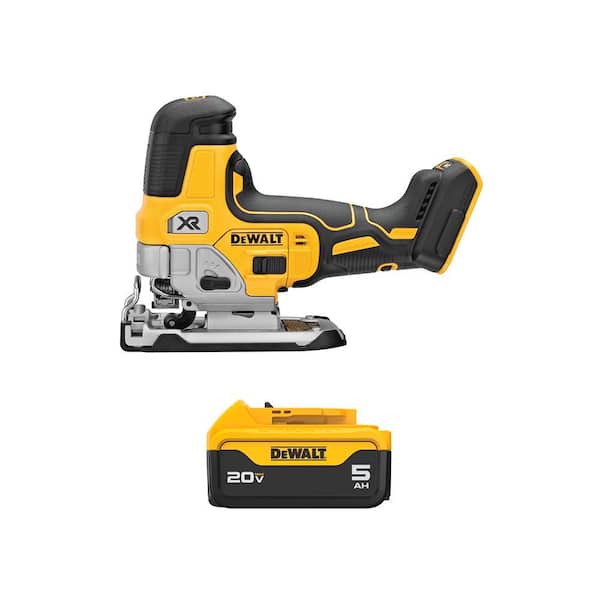
If your DeWalt jigsaw won't start and it uses a 20V MAX battery, begin with the battery. Press the battery indicator button if your pack has one. One flashing light, no lights, or a rapid fault signal can point to a low charge or a battery problem.
Place the battery on a compatible DeWalt charger. Watch the charger lights for a normal charging pattern. If the charger shows a fault, allow the battery to cool, then try again. Lithium-ion batteries may stop charging when they are too hot or too cold.
Test the jigsaw with another known-good battery if possible. This is one of the fastest ways to separate a tool problem from a battery problem. Do not use a damaged, swollen, cracked, or leaking battery.
Next, inspect the connection:
• Remove the battery.
• Look at the metal contacts inside the tool.
• Blow away loose dust with clean, dry air.
• Check for bent contacts or melted plastic.
• Reinstall the battery until it clicks firmly into place.
Do not scrape the contacts with a knife. A sharp tool can damage the plating or create a short circuit. A soft brush or a short burst of dry air is safer.
A useful workshop lesson is to avoid testing only one battery. A weak battery may run a drill but fail under the higher starting load of a jigsaw. Try a fully charged pack that works correctly in another DeWalt tool.
Check the trigger and lock-off button
A DeWalt jigsaw may have a lock-off button that prevents accidental starting. Sawdust can collect around this control and stop it from moving through its full range. A trigger may also feel normal while its internal contacts are worn.
Remove the battery before checking the trigger. Press the lock-off button several times. It should move freely and return to its normal position. Then squeeze the trigger gently without forcing it.
Look for these signs:
• The trigger does not move.
• The lock-off button stays pressed.
• The trigger moves with no resistance.
• The tool starts only when the trigger is held at a certain angle.
• The jigsaw starts and stops when the handle moves.
These signs often point to a worn switch or a broken wire. Do not spray oil, water, or general-purpose cleaner into the trigger. Liquid can damage the electronic parts and may create a safety risk.
If the trigger feels mechanically broken, replace the correct switch assembly. Bypassing the safety switch is not a safe repair. The lock-off system helps prevent accidental blade movement during carrying and setup.

Troubleshoot a corded DeWalt jigsaw
When a corded DeWalt jigsaw won't start, test the outlet first. Plug in a lamp or another simple device. If the outlet has no power, check the breaker or ground-fault protection device.
Inspect the entire power cord. Pay close attention to the area where the cord enters the handle. This point bends often and may develop an internal break even when the outer insulation looks fine.
Unplug the jigsaw and check for:
• Cuts or crushed areas in the cord
• Burn marks near the plug
• Loose prongs
• A damaged strain relief
• A cord that feels unusually soft or stiff
Never operate a jigsaw with exposed copper or damaged insulation. Do not repair a damaged tool cord with electrical tape alone. A replacement cord or professional repair is the safer choice.
Extension cords can also cause trouble. A cord that is too long or too thin may create voltage drop. The motor may hum, run weakly, or fail to start. Use a heavy-duty extension cord that matches the tool’s power requirements and keep the cord fully uncoiled during use.
Test for overheating or overload protection
A DeWalt jigsaw can stop after cutting thick wood, metal, or tough composite material. The motor may have become too hot, or the battery may have entered thermal protection. This shutdown protects the tool from serious damage.
Let the jigsaw cool for 20 to 30 minutes. Remove the battery during this time. Keep the tool in a dry, shaded place, not in a freezer or near a heater.
After cooling, check the blade and workpiece. A dull blade creates extra load and can make the motor work like a runner climbing a hill. Use the correct blade for the material, reduce pressure, and allow the teeth to do the cutting.
Do not keep pulling the trigger if the motor only clicks or hums. Repeated attempts can overheat the switch, battery, or motor. If the tool smells burnt, shows smoke, or becomes hot quickly, stop testing it.

Inspect the blade and moving parts
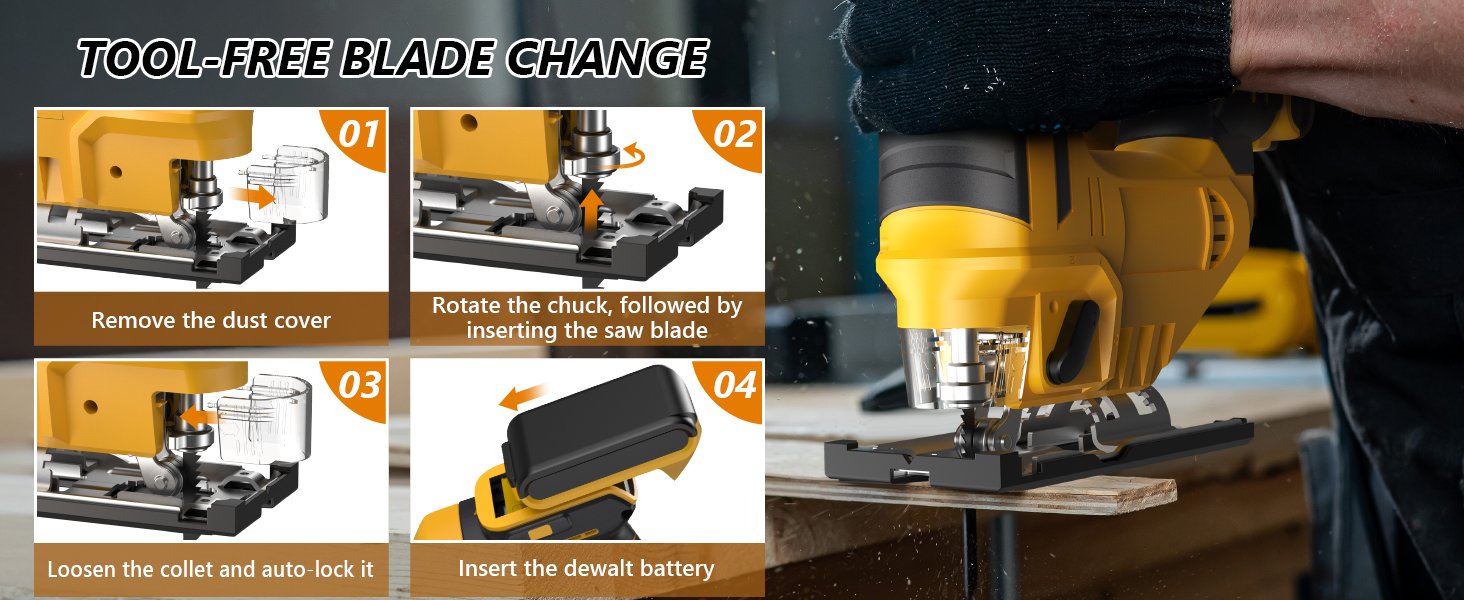
A jammed blade can make a DeWalt jigsaw won't start problem appear to be electrical. Remove the battery or unplug the tool, then check whether the blade moves freely in the blade guide. Never test movement with the power connected.
Remove the blade according to the model instructions. Clear compacted sawdust from the blade clamp, guide roller, and base area. Use a brush or dry compressed air, and wear eye protection.
Inspect the blade for:
• Bent teeth
• Cracks
• Resin buildup
• Incorrect installation
• A blade that is too long or unsuitable for the material
A damaged blade should be replaced, not straightened. A bent blade can increase vibration and place stress on the guide mechanism. It can also wander away from the cut line.
If the motor runs but the blade does not move, the problem may be inside the gearbox, eccentric mechanism, or blade drive. That is different from a no-start fault and may require a service center.
Look for electrical or motor failure
If the battery, outlet, trigger, and blade area check out, the fault may be inside the jigsaw. Common internal failures include a damaged switch, loose wire, failed control board, worn brushes, or a burned motor winding.
A cordless jigsaw may use electronic controls that manage speed and motor protection. If the tool has power but gives no response, the control board or trigger module may be faulty. These parts can be model-specific.
Older corded jigsaws may use replaceable carbon brushes. Worn brushes can cause weak operation, intermittent starting, sparking, or complete failure. Not every DeWalt model has user-serviceable brushes, so confirm the design before opening the housing.
Stop and seek professional service when:
• You smell burned insulation.
• The tool sparks heavily.
• The housing is melted.
• The motor only hums.
• The jigsaw starts by itself.
• A wire is loose inside the handle.
• The tool is still under warranty.
Opening the housing can expose live electrical parts on a corded model. It can also affect warranty coverage. If you lack experience with power-tool repair, a qualified service center is usually safer and faster.

A practical diagnosis order
A good diagnosis should move from simple checks to complex ones. This saves time and prevents unnecessary part replacement.
Follow this order:
-
Disconnect the power source.
-
Check the battery charge or wall outlet.
-
Test another battery, charger, outlet, or extension cord.
-
Inspect the cord and battery contacts.
-
Check the lock-off button and trigger.
-
Remove the blade and clear packed debris.
-
Let the tool cool if it recently stopped.
-
Look for burning, smoke, unusual noise, or loose parts.
-
Contact an authorized repair provider if the fault remains.
This process helps identify the problem without guessing. Replacing a battery when the trigger is faulty wastes money. Replacing a trigger when the charger is defective creates the same frustration.
Keep the model number nearby. It is often printed on the tool label, battery compartment, or rating plate. The model number helps you find the correct switch, blade clamp, battery type, and repair instructions.
Mistakes to avoid when fixing a DeWalt jigsaw
One common mistake is spraying lubricant into the trigger. Most modern jigsaws contain electrical contacts and electronic controls that do not need household oil. Lubricant can attract dust and make the switch worse.
Another mistake is using a battery that looks compatible but is not approved for the tool. Use the correct DeWalt battery family and charger. Never modify the battery terminals or use a damaged pack.
Avoid holding the trigger down while the blade is stuck. This places high stress on the motor and power electronics. Release the trigger, disconnect the battery, and free the workpiece safely.
Do not ignore warning signs such as heat, smoke, burning odor, or heavy sparks. These signs are not normal wear. They indicate a possible electrical or motor fault that can become more serious.
In practical tool maintenance, the best repair is often the repair you prevent. Clean dust after use, store batteries at a moderate temperature, and replace dull blades before the motor begins to struggle.
When to repair or replace the jigsaw
Repair makes sense when the issue is a battery, switch, cord, blade clamp, or another replaceable part. It may also be worthwhile when the tool is part of a larger battery system that you already use.
Replacement may be more practical when the motor, control board, gearbox, and switch have failed together. The cost of parts and labor can approach the price of a new jigsaw. Compare the estimate with the tool’s age, condition, and warranty status.
Check whether the tool qualifies for warranty service before opening it. Keep your receipt, model number, and purchase details. A professional technician can test current draw, switch continuity, motor condition, and control-board operation with the correct equipment.
The main limitation of home diagnosis is that a silent tool can have several hidden faults. A multimeter can help, but incorrect testing on a corded tool can cause shock or further damage. When in doubt, stop at the external checks.
How to prevent a no-start problem
Good use habits protect both the motor and the power system. Choose a sharp blade and match its tooth pattern to wood, metal, plastic, or laminate. Let the jigsaw cut at its own pace instead of forcing it through the material.
Use these maintenance habits:
• Remove the battery after use.
• Keep the vents clear.
• Brush away sawdust before storage.
• Store the tool in a dry place.
• Avoid leaving batteries in a hot vehicle.
• Inspect the cord before every corded job.
• Charge batteries with the correct charger.
• Replace damaged blades promptly.
• Do not overload the jigsaw with excessive pressure.
A clean tool runs cooler and is easier to inspect. Battery care also matters. Lithium-ion packs last longer when protected from extreme heat, deep damage, and physical impact.
Frequently Asked Questions About a DeWalt Jigsaw Won't Start
Why won't my DeWalt jigsaw start with a charged battery?
The battery may be charged but unable to deliver enough current under load. Test the jigsaw with another compatible battery, then inspect the contacts, lock-off button, and trigger.
Why does my DeWalt jigsaw have power but not run?
A faulty trigger, safety switch, control board, or internal wire may prevent the motor from receiving power. If the battery and controls look normal, professional testing is the safest next step.
Can a dull blade stop a DeWalt jigsaw from starting?
A dull blade usually does not stop the jigsaw by itself, but a jammed or heavily loaded blade can activate thermal protection. Remove the power source, inspect the blade, and allow the tool to cool before testing again.
How do I reset a DeWalt cordless jigsaw?
Remove the battery for several minutes and let the tool cool if it was hot. Reinstall a fully charged compatible battery; if it still does not respond, the issue may be a switch, battery, or electronic fault rather than a simple reset.
Why does my corded DeWalt jigsaw only hum?
A humming sound can indicate a jammed blade drive, low voltage, worn motor parts, or a failing motor. Unplug the tool immediately and do not keep pulling the trigger.
Is it safe to bypass the DeWalt jigsaw safety switch?
No. The safety switch helps prevent accidental starting and should not be bypassed. Replace the correct switch assembly or have the tool repaired by a qualified technician.
Should I repair or replace a DeWalt jigsaw that will not start?
Repair is often sensible when the fault is a battery, cord, trigger, or switch. Replacement may be better when the motor or control board has failed and the repair cost is close to the price of a new tool.
Conclusion
When a DeWalt jigsaw won't start, begin with the simplest causes: battery charge, outlet power, contacts, trigger, lock-off button, blade, and overheating. Test one item at a time, disconnect power before inspecting the tool, and never bypass a safety feature.
A careful diagnosis can save the cost of an unnecessary replacement. If you find smoke, heavy sparks, melted parts, or an internal electrical fault, use qualified repair service. Put these checks into practice on your next troubleshooting job, and share your model and symptoms in the comments to help others find the right solution.