Nail Gun Trigger Not Working: Quick Fix Guide
A nail gun trigger usually stops working because of air, safety lock, jam, wear, or internal valve issues.
A nail gun trigger not working can bring a project to a dead stop, whether you are framing a wall, finishing trim, or just trying to get one stubborn board in place. I have seen this issue many times in shop work and on job sites, and the fix is often simpler than it first looks. If you want to find the real cause fast, avoid unsafe guesses, and get back to work with confidence, this guide walks you through the most likely problems, the checks that matter, and the repairs worth trying before you replace the tool.
What a nail gun trigger does
The trigger is the part that tells the nail gun when to fire. In most pneumatic and cordless models, it works with a safety nose, an internal valve, and a drive system.
When everything is working right, the trigger, contact tip, and air or battery system all have to line up. If one piece fails, the nail gun trigger not working problem shows up right away.
A trigger can fail in a few ways:
- It feels stuck or frozen
- It moves, but nothing happens
- It fires only sometimes
- It fires weakly or with delay
- It works only in one firing mode
A trigger problem does not always mean the trigger itself is broken. Sometimes the issue is low air pressure, a jammed nail, dirt in the valve, or a safety mechanism doing its job.

Common reasons a nail gun trigger not working
Most nail gun failures come from a short list of causes. In my experience, the smallest detail is often the one people miss.
Low air pressure or weak battery
For pneumatic nail guns, low compressor pressure is one of the most common causes. If the tool does not get enough air, the trigger may move but the gun will not drive a nail.
For cordless nailers, a weak battery can create the same headache. The motor may click, stall, or refuse to cycle.
What to check:
- Make sure the compressor is set to the right PSI
- Check the air hose for leaks or kinks
- Test with a fully charged battery
- Try a different battery if you have one
A good rule of thumb is to start with power supply before opening the tool. That saves time and keeps the diagnosis clean.
Safety contact not engaged
Most nail guns use a safety nose or contact tip that must press against the work surface before the gun fires. If that tip is dirty, stuck, bent, or not fully depressed, the trigger may seem dead.
This is a built-in safety feature, not a defect in many cases. It is there to help prevent accidental firing.
Check for:
- Sawdust buildup around the nose
- A bent safety tip
- A stiff contact mechanism
- A worn bumper or spring
If the safety nose is not moving smoothly, the trigger may not fire even though the rest of the tool looks fine.
Jammed nails or fastener misfeed
A jam is a classic reason for a nail gun trigger not working. If a nail is bent, misaligned, or stuck in the magazine, the trigger may lock out or refuse to cycle.
I once watched a crew member keep squeezing a nailer that had a tiny bent nail lodged near the driver blade. He thought the trigger had failed. The real issue was a jam so small it was easy to miss.
Check for:
- Bent nails in the magazine
- Damaged nail strips
- A jammed driver blade
- Dirt or broken fastener pieces inside the nose
Always disconnect air or remove the battery before clearing a jam. That one habit prevents a lot of painful mistakes.
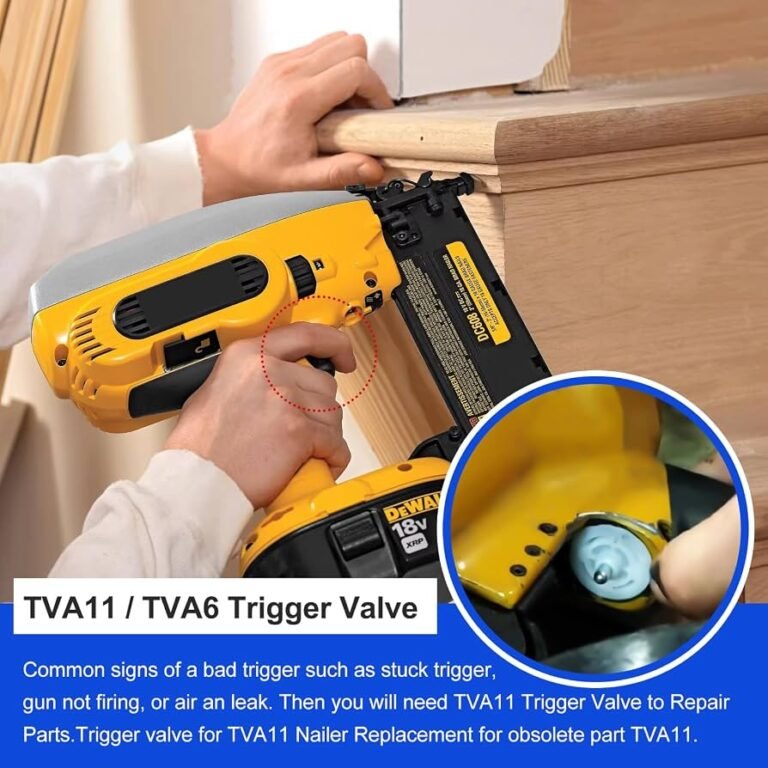
Dirty or sticky trigger valve
Inside many pneumatic nail guns is a trigger valve that opens when you pull the trigger. If dirt, oil sludge, or wear builds up there, the trigger may stop responding.
This problem is more common in tools that have not been cleaned in a while. Old lubrication mixed with dust can act like glue.
Signs include:
- A trigger that feels heavy
- Delayed firing
- Intermittent response
- A soft hiss with no nail release
A proper cleaning and light tool oil can help, but do not flood the valve. Too much oil can make the problem worse.
Worn trigger parts
Trigger components wear out over time. Springs can weaken. Pins can loosen. Seals can fail. Plastic parts can crack.
If you use the nail gun often, wear is a real possibility. I have seen older trim nailers that looked fine outside but had a tired internal trigger assembly.
Common wear signs:
- Loose trigger feel
- Trigger does not spring back
- Inconsistent firing
- Air leaks near the handle
- No response even after cleaning
When wear is the cause, replacement parts are often the best fix.
Trigger lock or firing mode issue
Many nail guns have a lockout or mode selector. If the tool is set to sequential mode, bump mode, or locked off, it may not fire the way you expect.
This is easy to overlook because the tool can look normal from the outside. The issue is often just a switch in the wrong position.
Check for:
- Lock switch engaged
- Mode selector moved accidentally
- Sequential fire mode mistaken for malfunction
- Depth adjustment set too deep
I always tell people to read the mode selector first. Half the time, the “broken” gun is just set wrong.
How to diagnose a nail gun trigger not working
A good diagnosis follows simple steps. Do not jump straight to disassembly unless you have ruled out the basics.
Step 1: Disconnect the power source
Before anything else, unplug the air hose or remove the battery. This is the safest first move.
Never try to probe the nose or trigger while the tool is live. Nail guns can fire with serious force, even if the problem is intermittent.
Step 2: Check the air or power supply
If it is a pneumatic nailer, verify the compressor pressure and hose connection. If it is cordless, use a known good battery.
Ask yourself:
- Is the compressor on?
- Is the regulator set correctly?
- Is the hose leaking?
- Is the battery fully charged?
This step solves more problems than most people expect.
Step 3: Inspect the magazine and nose
Open the magazine and look for bent nails or debris. Then inspect the nose area for any sign of blockage.
A tiny piece of broken fastener can keep the whole tool from cycling. Dust and resin buildup can also make the safety nose stick.
Step 4: Test the trigger feel
With the tool safely disconnected, pull the trigger several times. It should feel smooth and spring back cleanly.
If it feels loose, stiff, or uneven, the trigger mechanism may need cleaning or repair.
Step 5: Check the safety contact
Press the contact tip against a firm surface and test the trigger again. Some models will not fire unless the contact tip is fully depressed.
If the contact tip is not moving freely, clean it and check for damage.
Step 6: Look for air leaks or unusual sounds
On pneumatic nailers, listen for hissing around the handle, trigger, or nose. That often points to worn seals or an internal valve issue.
A leak is a strong clue that the trigger is fine but the gun cannot build enough pressure to fire.
Step 7: Review the manual for your model
Different brands use different trigger systems. Paslode, DeWalt, Bostitch, Metabo HPT, Hitachi, and Senco tools may all have slightly different lockouts or firing systems.
If your gun has a specific reset step, the manual is the best place to confirm it.
How to fix a nail gun trigger not working
Once you know the cause, the fix is usually straightforward. Work from the simplest fix to the most involved.
Clean the trigger area
Use compressed air and a clean cloth to remove sawdust and debris. If the tool allows it, apply the manufacturer-recommended lubricant sparingly.
Do not soak the trigger or valve. More oil is not always better.
Clear jams carefully
If a nail is stuck, remove the air source or battery first. Then open the magazine and clear the jam with the proper method for your tool.
Avoid forcing the driver blade with metal tools unless the manufacturer says it is safe. That can damage the nose assembly.
Replace worn seals or O-rings
If the trigger feels fine but the gun leaks air or will not cycle, internal seals may be worn. This is common in older pneumatic nailers.
A seal kit can restore performance if the body and driver are still in decent shape. If the tool is heavily worn, replacement may be smarter than repeated repairs.
Replace the trigger valve or assembly
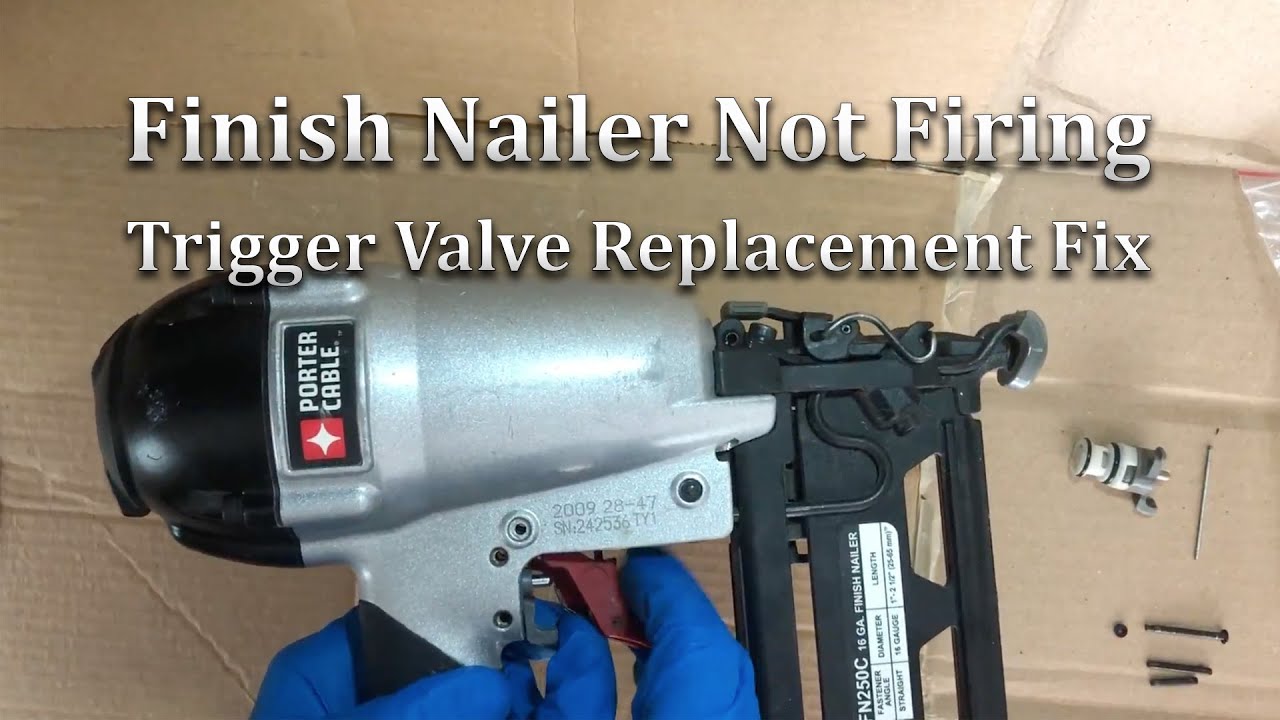
If cleaning does not help and the trigger still fails, the trigger valve may be bad. On some models, the whole trigger assembly is easier to replace than individual parts.
This is one of those repair jobs where model-specific parts matter. Use the exact part number when possible.
Service or replace the safety contact
If the safety nose is bent or stuck, the gun may never recognize that it is pressed against a surface. Cleaning may help, but a damaged contact tip often needs replacement.
This fix is important because a faulty safety contact can create both a no-fire problem and a safety risk.
Get the right professional repair
If the nail gun trigger not working problem comes with burning smells, cracked housing, repeated leaks, or electrical issues in a cordless tool, a pro repair may be the safest move.
I have seen people spend hours chasing a simple internal failure when a service center could diagnose it in minutes. Sometimes paying for expert help saves more than it costs.

Safety tips before you troubleshoot
Nail guns are powerful tools. Even a small mistake can cause injury.
Keep these safety habits in place:
- Disconnect the air hose or battery before inspection
- Remove all fasteners before clearing jams
- Wear safety glasses
- Keep fingers away from the nose and trigger
- Never point the tool at yourself or anyone else
- Use only the correct fasteners for the model
A nail gun that seems dead can still store pressure or cycle unexpectedly. Treat it like it is live until you know otherwise.
How to prevent trigger problems in the future
A little maintenance goes a long way. Most trigger issues are easier to prevent than to repair.
Good habits include:
- Clean the tool after use
- Store it in a dry place
- Use the correct nails and fasteners
- Check air pressure before every job
- Lubricate only as recommended
- Empty the magazine when storing the tool
- Inspect the nose and trigger area for buildup
I have found that tools last much longer when they are cleaned before they are put away. It sounds simple, but dust and moisture are rough on trigger parts.
When the trigger issue is a sign of a bigger problem
Sometimes a nail gun trigger not working is just one symptom of a larger issue. If the tool is old, loud, leaky, or weak, the trigger may not be the real root cause.
Watch for broader warning signs:
- Frequent jams
- Weak drives
- Air leaks
- Slow recovery time
- Misfires
- Cracked housing
- Excessive wear on the magazine or nose
At that point, you should compare repair cost to replacement cost. For low-cost tools, replacement can be the smarter choice.
Frequently Asked Questions of Nail gun trigger not working
Why is my nail gun trigger pulling but not firing?
This usually points to low air pressure, a jam, a stuck safety contact, or a faulty trigger valve. Check the power source first, then inspect the nose and magazine for blockage.
Can a dirty nail gun trigger stop the tool from firing?
Yes, dirt and sawdust can keep the trigger valve or safety contact from moving properly. A careful cleaning often fixes the problem if the internal parts are not worn out.
Why does my nail gun fire sometimes but not every time?
Intermittent firing often comes from weak air supply, worn seals, or a sticky trigger mechanism. It can also happen if the nails are not loaded correctly or the contact tip is not fully engaging.
Is it safe to keep using a nail gun with a bad trigger?
No, it is not a good idea. A trigger problem can lead to misfires, accidental firing, or a complete loss of control, so the tool should be repaired before continued use.
Do cordless nail guns have the same trigger problems as pneumatic ones?
Some problems overlap, like jams and worn parts, but cordless tools also depend on batteries, motors, and electronics. If a cordless nail gun trigger not working issue appears, battery health and internal electronics should be checked too.
Conclusion
A nail gun trigger not working is frustrating, but it usually comes down to a manageable cause like low pressure, a jam, a stuck safety contact, or worn internal parts. The key is to start simple, work safely, and check the most likely problems before assuming the tool is done for.
If you take the time to clean the gun, inspect the fasteners, and confirm the power source, you can solve many trigger issues without guesswork. And if the problem turns out to be internal wear, you will know whether a repair or replacement makes more sense.
Use the steps in this guide the next time your nail gun stops responding, and you will save time, stress, and maybe a trip to the tool store. If this helped, explore more tool repair guides and share your own fix in the comments.