Chainsaw Smoking: Causes, Fixes, And Safety Tips
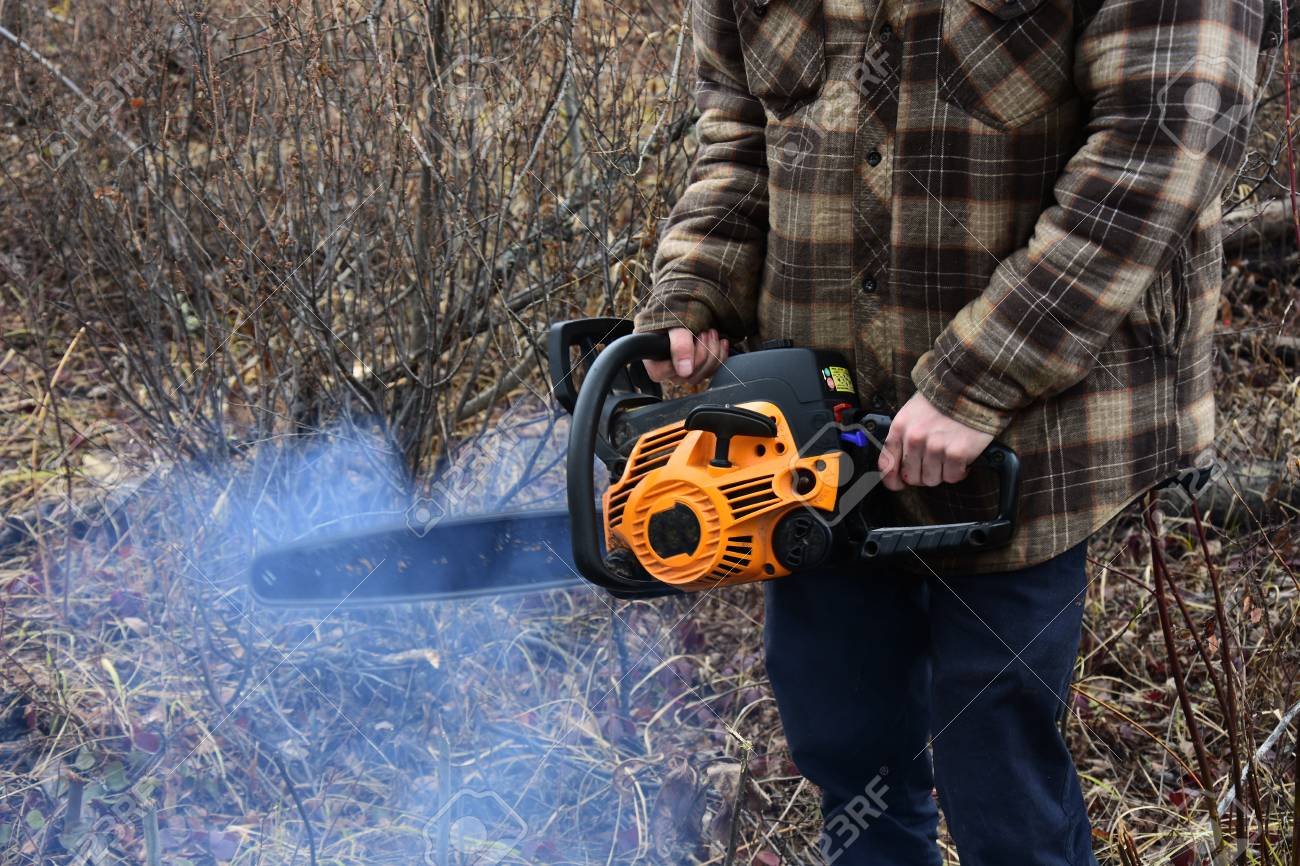
Chainsaw smoking usually signals excess heat, a rich fuel mix, poor airflow, or a damaged cutting system.
Chainsaw smoking is never something to ignore. A small puff may come from a dull chain or dry wood, but thick smoke can point to engine trouble, a blocked air filter, or a failing clutch. This guide explains the main causes, safe checks, practical fixes, and warning signs that mean you should stop work at once.

What Chainsaw Smoking Means
Chainsaw smoking happens when heat builds faster than the saw can release it. The heat may come from the engine, chain, guide bar, clutch, or wood dust near the muffler. Smoke color, smell, and location can help you find the cause.
A chainsaw uses a small two stroke engine. It needs the right mix of fuel, oil, air, and spark. It also needs a sharp chain and steady lubrication. If one part fails, friction or poor combustion can create smoke.
Chainsaw smoking may be minor, but it can also warn of fire, engine damage, or personal injury. Always stop the saw before inspecting it. Let hot parts cool first, and wear gloves when handling the chain.
The most common smoke sources are:
• The cutting chain and guide bar
• The engine and muffler
• The clutch cover
• The fuel system
• Wood dust near hot engine parts

Common Causes of Chainsaw Smoking
A dull or damaged chain
A dull chain is one of the most common causes of chainsaw smoking. Instead of cutting clean chips, it creates fine dust and pushes hard against the wood. This adds heat to the chain, bar, and clutch.
A sharp chain should produce chips. If it produces powder, check the cutters. The chain may need sharpening, depth gauge adjustment, or replacement.
A chain can also smoke when it has damaged cutters. Hitting a rock, nail, or hidden wire can bend or blunt the teeth. Do not keep cutting with a damaged chain.
A dry guide bar or chain
The chain needs a steady flow of bar and chain oil. This oil reduces friction between the chain and guide bar. Without it, the bar can become hot enough to discolor, smoke, or warp.
Low oil, a blocked oil hole, or a faulty oil pump can cause this problem. Sawdust can also block the groove in the guide bar. A dry chain may look normal at first, but heat rises quickly during a cut.
A loose or overly tight chain
A loose chain can slap the bar and create extra friction. It may also derail, which creates a serious injury risk. An overly tight chain cannot move freely and may overheat the bar and clutch.
With the engine off and the chain cool, pull the chain away from the bar. It should move freely and still remain seated in the guide groove. Follow the tension setting in your owner’s manual, since correct tension varies by model.
A blocked air filter
The engine needs clean air to burn fuel well. A blocked air filter limits airflow and can make the fuel mixture too rich. That means the engine receives too much fuel and not enough air.
A rich engine may produce dark exhaust smoke, run poorly, foul the spark plug, or lose power. Foam filters may be washable, while paper filters often need replacement. Never clean a paper filter with high pressure, as this can damage the filter material.
Incorrect fuel or fuel mixture
Most gas chainsaws use a specific gasoline and two stroke oil mixture. The ratio is set by the manufacturer. Using too much oil can create heavy exhaust smoke and carbon buildup.
Using straight gasoline in a two stroke engine is far more dangerous. It removes the lubrication the engine needs and can cause piston or cylinder damage. Always use a clean fuel container and measure the oil carefully.
Old gasoline can also cause poor combustion. Fuel that has been stored too long may absorb moisture or lose its useful properties. Use fresh fuel that matches the manufacturer’s instructions.
A dirty muffler or spark arrestor
The muffler and spark arrestor screen control exhaust flow. Carbon can build up inside the screen, especially when the saw runs with a rich fuel mix. Restricted exhaust can cause poor power, excess heat, and smoke.
A blocked spark arrestor also reduces performance. Remove and clean it only when the engine is cold and the procedure is approved for your model. Replace a damaged screen before using the saw again.
Clutch overheating
The clutch connects the engine to the chain. If the chain cannot move freely, the clutch may slip. This creates heat beneath the clutch cover and may produce a sharp, hot smell.
Common causes include:
• Holding the throttle while the chain is stuck
• Running the saw at low speed under heavy load
• A dull chain
• An incorrect chain brake setting
• A damaged clutch drum or spring
If smoke comes from the clutch area, stop immediately. Do not touch the cover until it cools.
Wood dust near the muffler
Dry wood dust and chips can collect around the muffler. The muffler becomes very hot during use, so dust can smolder or ignite.
This type of chainsaw smoking may look like a small cloud near the side of the engine. Clean the saw often, especially after cutting dry wood, resinous wood, or dusty material.

Smoke Color and What It Can Tell You
Smoke color is not a perfect diagnosis, but it offers a useful first clue.
White or light blue smoke
Light blue smoke often comes from burning excess two stroke oil. A wrong fuel ratio, old fuel, or an over-oiled mixture may be responsible.
White smoke may also come from moisture or oil burning in the engine. If it continues after the saw warms up, stop using the machine and arrange a proper inspection.
Black smoke
Black smoke usually means the engine is burning too much fuel. A dirty air filter, incorrect carburetor setting, blocked muffler, or faulty choke can cause this condition.
Make sure the choke is fully off once the engine starts. If black smoke continues, do not keep adjusting the carburetor without the correct model instructions.
Gray smoke near the chain
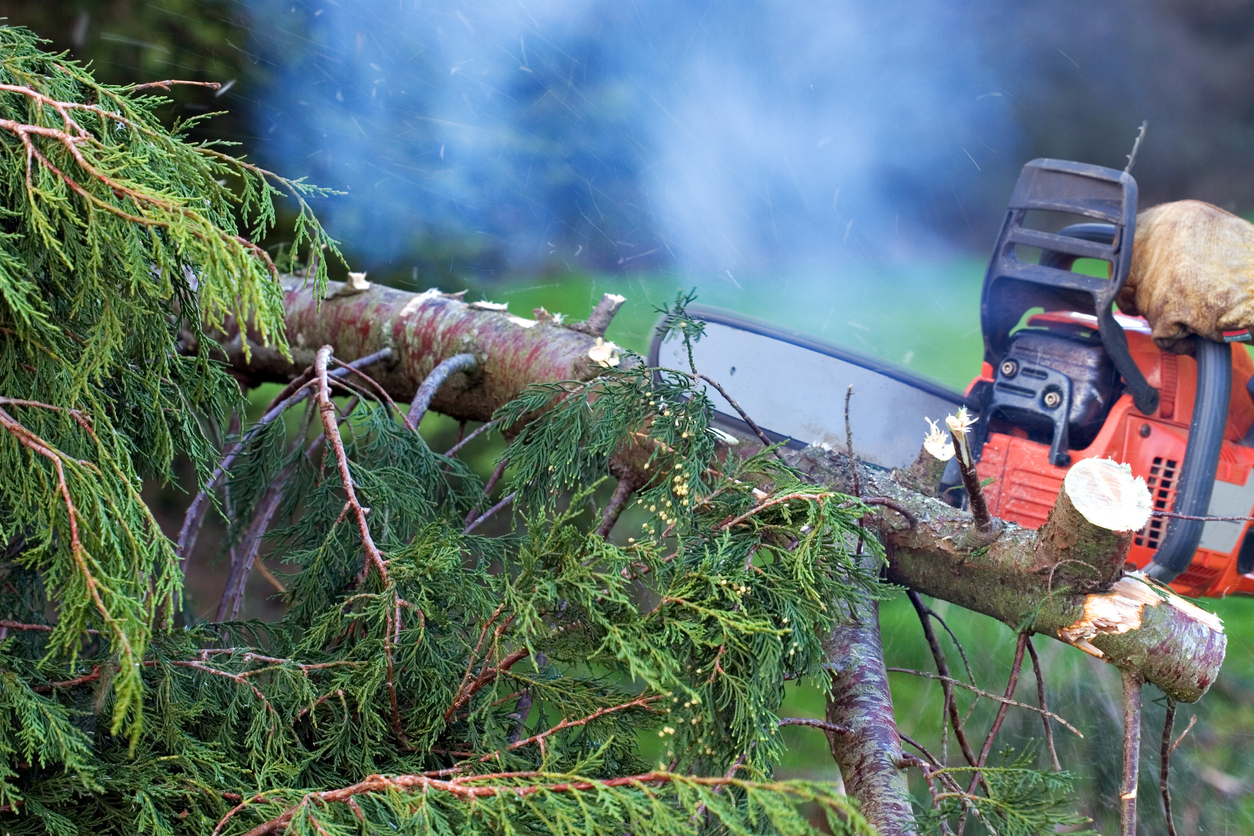
Gray smoke near the bar usually points to friction. Check chain oil, chain tension, bar damage, and chain sharpness.
This form of chainsaw smoking can damage the guide bar within minutes. A bar that turns blue, bends, or develops deep rails may need replacement.
Smoke from the engine area
Smoke near the engine may come from spilled fuel, a leaking oil cap, a hot muffler, or an electrical problem on some battery models.
Turn off the saw and move it away from dry grass, leaves, and fuel containers. Never restart a saw that has a fuel leak.
How to Diagnose Chainsaw Smoking Safely
A careful inspection can help you find the problem without making the damage worse. Use this order.
-
Turn off the engine and engage the chain brake.
-
Move the saw to a clear, open area away from fuel and dry leaves.
-
Wait until the muffler, bar, and chain are cool.
-
Check where the smoke came from.
-
Inspect the chain for dull, broken, or bent cutters.
-
Check whether the chain moves freely by hand while wearing gloves.
-
Check the bar oil tank and look for oil reaching the chain.
-
Inspect the air filter, cooling vents, and muffler screen.
-
Check the fuel type and mixture.
-
Look for melted plastic, leaking fuel, loose parts, or burned paint.
Do not test a smoking saw by holding it close to your face. Do not remove the clutch cover while the engine is hot. If the source is unclear, take the saw to a qualified repair shop.
A practical example is a saw that smokes only during large cuts. That pattern often points to a dull chain, heavy pressure, or poor oil flow. A saw that smokes at idle may have an engine, fuel, or clutch problem instead.

How to Stop Chainsaw Smoking
The correct repair depends on the source. Begin with simple maintenance, then move to professional service when needed.
Sharpen or replace the chain
Use the file size and filing angle listed in the owner’s manual. All cutters should have a similar length. Uneven cutters make the saw cut to one side and increase vibration.
Replace the chain if it has cracked links, severe damage, or very short cutters. A new chain is cheaper than a damaged bar, clutch, or engine.
Clean the guide bar
Remove the chain and clear the bar groove with a suitable cleaning tool. Clean the oil holes at the bar base. Turn the bar over during routine maintenance so wear is more even.
Do not widen the groove with a sharp object. Damage to the groove can prevent proper chain support.
Check chain oil flow
Fill the oil tank with the correct bar and chain oil. Start the saw briefly and point the bar toward a clean piece of cardboard. A light oil line or spray should appear when the chain runs.
Keep body parts away from the chain during this test. If no oil appears, the oil passage, pump, or pickup may need service.
Replace or clean the air filter
Follow the cleaning method for your filter type. A foam filter may need washing and complete drying. A paper filter may need gentle cleaning or replacement.
Never run the saw without its air filter. Dust can enter the engine and cause rapid wear.
Use the correct fuel
Use the fuel grade and oil ratio listed in the manual. Mix fuel in a marked container, not by guessing. Shake the container before filling if the oil can settle.
Store fuel in an approved container away from heat and sunlight. Dispose of stale fuel according to local rules.
Service the clutch or engine
Clutch damage, carburetor problems, piston scoring, and crankshaft seal failure require more skill. These repairs often need special tools and model-specific settings.
A repair shop can test compression, inspect the clutch, clean the carburetor, and set the engine safely. Avoid copying a random carburetor adjustment from an online video. A setting that works on one saw may damage another.

Preventing Chainsaw Smoking
Good maintenance prevents most chainsaw smoking. A few minutes of care can save the cost of a bar, clutch, or engine.
Before each use:
• Check fuel and bar oil levels
• Inspect the chain brake
• Check chain tension
• Look for loose nuts and damaged covers
• Clean the air intake and cooling vents
• Confirm that the chain is sharp
• Inspect the bar for wear
During cutting, let the chain do the work. Do not force the bar into the wood. Use a sharp chain, steady throttle, and the correct cutting method.
After use, clean chips from the clutch cover and muffler area. Store the saw in a dry place. Keep the chain covered when transporting the machine.
Follow the maintenance schedule in your manual. Professional users may need more frequent cleaning because they cut for longer periods and work in dusty conditions.
A useful habit is to stop when the saw sounds different. Changes in engine pitch, cutting speed, vibration, or smell often appear before visible smoke. Treat these signs like a warning light on a car dashboard.
Chainsaw Safety When Smoke Appears
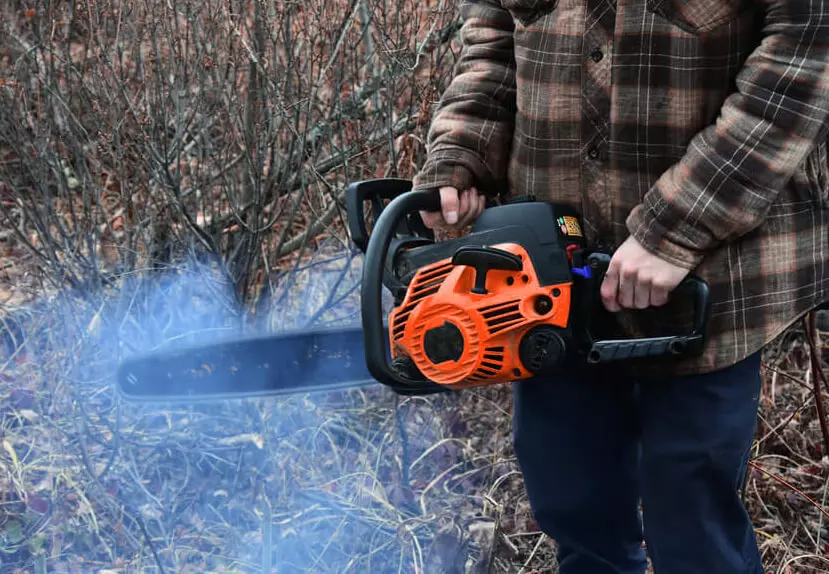
Smoke creates both mechanical and fire risks. A hot muffler can ignite dry vegetation, and a damaged chain can break or derail.
Stop the saw at once if you notice:
• Thick or growing smoke
• Flames or glowing wood dust
• A burning plastic smell
• A chain that stops while the engine races
• A bar that feels unusually hot
• Fuel leaking from the tank or lines
• Sudden loss of power
• Loud knocking or unusual vibration
Move away from the saw if fuel is leaking. Do not use a flame to search for leaks. Keep a suitable fire extinguisher nearby when working with gasoline equipment, but never put yourself at risk to save a machine.
Wear eye protection, hearing protection, gloves, boots, and suitable leg protection. Keep bystanders away from the cutting area. Safety agencies consistently warn that chainsaw injuries can be severe, especially when kickback occurs.
Never operate a smoking chainsaw indoors. Carbon monoxide from the engine is dangerous even when smoke seems light.

Gas and Battery Chainsaw Smoking
Gas chainsaws produce exhaust by design, so some light smoke may be visible during cold starts or when the fuel mix contains extra oil. Heavy, ongoing smoke still indicates a problem.
Battery chainsaws do not produce engine exhaust. However, they can still smoke because of an overheated motor, damaged battery, failing controller, seized chain, or electrical short.
If a battery chainsaw smokes, release the trigger and remove the battery only if it is safe to do so. Move the battery away from flammable materials. Do not use or charge a battery that is swollen, cracked, hot, or damaged.
Battery smoke may have a sharp plastic or chemical smell. Treat it as an urgent warning, not as normal operation.
When to Call a Professional
Some chainsaw smoking problems are easy to fix, such as a dry chain or dirty air filter. Others need trained service.
Contact a qualified technician when:
• Smoke continues after basic maintenance
• The engine has low compression
• The clutch keeps overheating
• The saw leaks fuel
• The chain oil pump does not work
• The bar or crankshaft appears bent
• The battery or wiring shows heat damage
• You cannot identify the smoke source
Do not use a saw simply because it still starts. A machine can run while causing hidden damage. Continuing to cut may turn a small repair into a complete engine replacement.
A good repair shop should explain the fault, show damaged parts when practical, and provide a clear estimate. Keep the model and serial number available, since parts and settings vary widely.
Frequently Asked Questions About Chainsaw Smoking
Is it normal for a chainsaw to smoke?
A small amount of light smoke during a cold start may occur, especially with a gas saw and an oil-rich fuel mix. Thick, repeated, or localized smoke is not normal and should be investigated.
Why is my chainsaw smoking from the bar?
Smoke from the bar usually means high friction. Check chain sharpness, chain tension, guide bar condition, and bar oil flow before using the saw again.
Can a dull chain make a chainsaw smoke?
Yes. A dull chain creates dust instead of chips and forces the operator to apply more pressure. This raises heat around the chain, bar, and clutch.
Why does my chainsaw produce black smoke?
Black smoke usually indicates a rich fuel mixture. A dirty air filter, closed choke, blocked muffler, or incorrect carburetor setting may be the cause.
Is chainsaw smoking dangerous?
It can be dangerous because smoke may signal overheating, fire risk, fuel trouble, or a damaged cutting system. Stop the saw, let it cool, and inspect it before restarting.
Can low chain oil cause smoke?
Yes. Low oil or a blocked oil system can make the chain and bar overheat. Refill the oil tank and confirm that oil reaches the moving chain.
Should I keep using a chainsaw that smokes a little?
No, not until you know the cause. Light smoke can become severe damage or a fire, especially when the saw is used near dry grass, leaves, or wood dust.
Conclusion
Chainsaw smoking is a warning, not a normal feature. A dull chain, dry bar, blocked filter, wrong fuel mix, overheated clutch, or damaged engine can all create smoke.
Stop the saw, let it cool, identify the smoke location, and inspect the basic parts first. Use the correct fuel and bar oil, keep the chain sharp, and seek professional help when the fault involves the engine, clutch, fuel system, or battery.
A well-maintained chainsaw cuts faster, lasts longer, and is safer to use. Check your saw before the next cut, and share this guide with anyone who works with chainsaws.