Circular Saw Sparks Inside: Causes And Safe Fixes
Small sparks inside a circular saw often come from worn motor brushes, but large sparks signal a safety problem.
Seeing circular saw sparks inside the housing can be alarming, especially when the tool smells hot, loses power, or makes a sharp crackling sound. A tiny blue flash near the motor brushes may occur during normal operation, but bright, wide, or constant sparking needs attention.
This guide explains why circular saw sparks inside the motor happen, how to tell normal brush arcing from a serious fault, and what to do before using the saw again. The advice applies to corded and cordless circular saws, though the repair steps can vary by model.
What circular saw sparks inside usually mean
Most circular saw sparks inside the motor come from the brush and commutator area. Carbon brushes transfer electric current to the spinning armature, and a small amount of arcing can occur as the brushes move across the commutator segments.
A faint blue glow may be normal in some brushed motors. The spark should remain small and steady. It should not fill the motor housing, shoot toward the vents, or grow as the saw runs.
Circular saw sparks inside become more concerning when they appear with:
• A burning smell
• Smoke from the vents
• Loud crackling or popping
• Sudden speed changes
• Weak cutting power
• Heavy vibration
• A hot motor housing
• A circuit breaker that trips
A useful way to picture the problem is to compare the motor to a row of small electrical switches. The brushes must touch the commutator smoothly. If that contact becomes rough, dirty, weak, or uneven, electricity jumps across the gap and creates sparks.
The most common issue is brush wear. However, a damaged armature, blocked cooling path, loose wire, bad bearing, or incorrect power supply can also cause circular saw sparks inside.

Are small sparks inside a circular saw normal?
Small sparks can be normal in a brushed electric motor. The brushes physically contact a rotating commutator, so a minor blue arc may appear as current transfers from one part to another.
New brushes may spark more during their first few minutes of use. They need time to match the curve of the commutator. This process is called seating or bedding in.
Normal motor arcing usually has these traits:
• The sparks are small and blue
• They stay close to the brush area
• The motor runs at a steady speed
• There is no smoke or burning odor
• The saw keeps normal cutting power
• The sparking does not suddenly increase
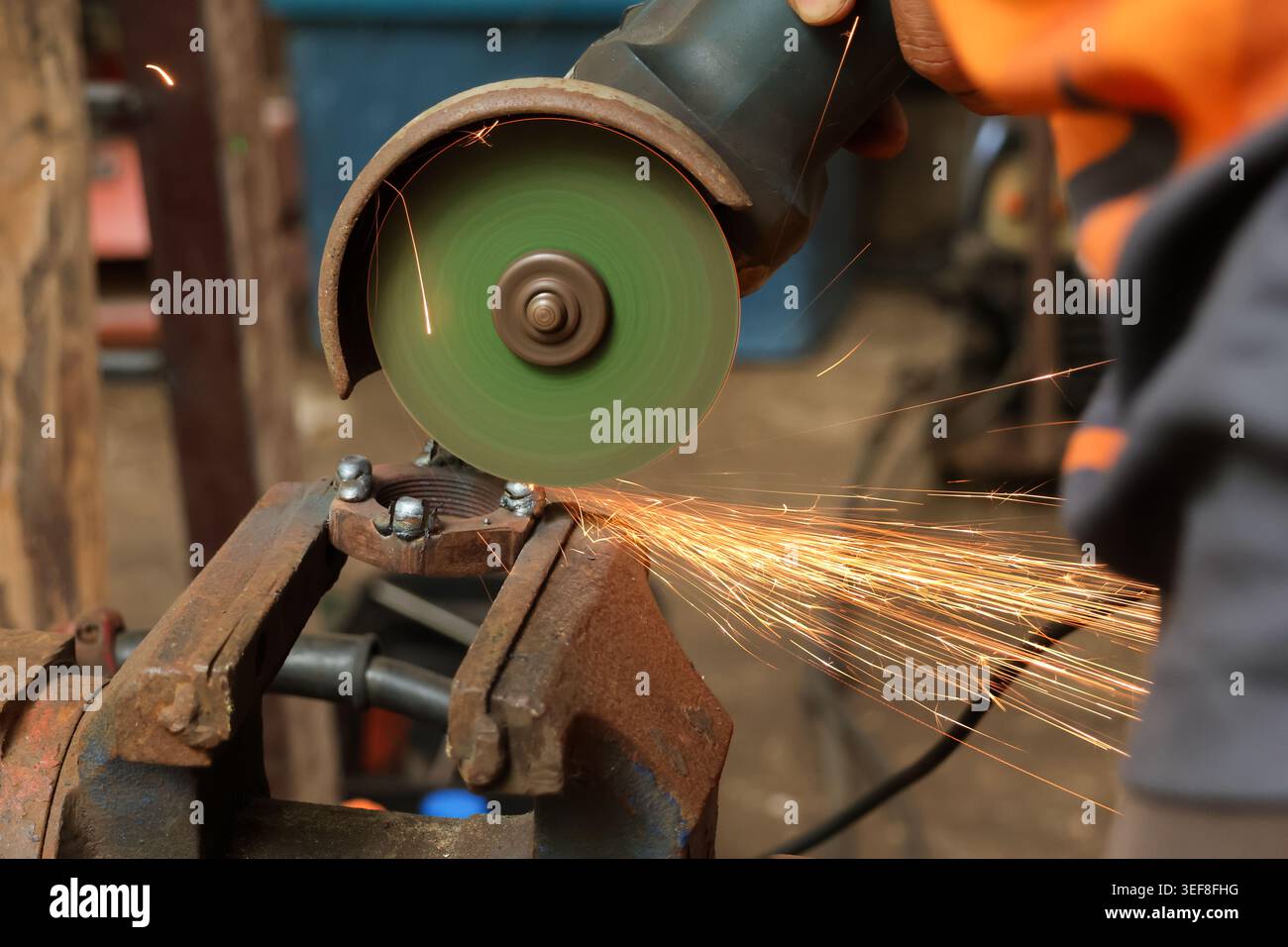
Circular saw sparks inside are not normal when the sparks are yellow, orange, or white and appear in a large circle around the armature. Excessive arcing can damage the commutator and create more heat.
Do not judge the risk by sound alone. Some dangerous electrical faults sound mild at first. Stop the saw, unplug it, and inspect it if the behavior changes.

Common causes of circular saw sparks inside
Worn carbon brushes
Carbon brushes become shorter as the saw runs. A worn brush may lose firm contact with the commutator. It can bounce, heat up, and create strong circular saw sparks inside the motor.
Many brushes have a wear line or spring-loaded design. If the brush is near its minimum length, replace the pair. Do not replace only one brush, because uneven contact can cause more arcing.
Damaged or dirty commutator
The commutator is the copper section that the brushes touch. It should look fairly smooth and even. Grooves, black burn marks, raised sections, or heavy scoring can point to a motor fault.
Dust from cutting wood can mix with brush carbon and form a conductive coating. This grime may increase circular saw sparks inside the motor and reduce electrical contact.
Failing armature
The armature is the rotating part of the motor. A shorted winding can create intense arcing at one or more commutator segments. The saw may also produce a strong electrical smell, lose speed, or run unevenly.
An armature fault is usually more costly than a brush replacement. It may require a professional repair or a replacement motor assembly.
Blocked vents and overheating
A circular saw depends on airflow to cool the motor. Fine sawdust can block the intake and exhaust vents. A packed dust path traps heat and may soften insulation around the windings.
Heat increases brush wear and can make existing circular saw sparks inside the motor worse. Never cover the vents while cutting, even for a short task.
Loose wires or damaged connections
A loose terminal, broken lead, or damaged switch can create an unstable current path. This may cause flickering, popping, or sparks near the switch and motor area.
Inspect the power cord, plug, battery contacts, and switch housing. Do not use the saw if the cord insulation is cut, crushed, melted, or loose at the strain relief.
Bearing problems
A worn bearing can let the armature move off center. That movement may cause the brushes to bounce against the commutator. It can also create vibration and a rough grinding sound.
Bearing failure often appears with circular saw sparks inside, but the sparks may be a secondary symptom. Replacing brushes alone may not fix the fault.
Incorrect voltage or power supply
A corded saw needs the voltage listed on its rating plate. A long, light-gauge extension cord can cause voltage drop and make the motor draw more current.
Cordless saws can also behave badly with a damaged battery, poor contact, or battery pack that cannot supply the required current. Use the battery type and charger approved for the tool.

What to do when you see sparks
Treat visible circular saw sparks inside as a warning until you know the cause. A short inspection can prevent a damaged motor, electrical shock, or fire.
Follow these steps:
-
Release the trigger and let the blade stop fully.
-
Disconnect the plug or remove the battery.
-
Move the saw away from wood dust, fuel, paint, and other flammable items.
-
Let the tool cool before touching the motor housing.
-
Check for smoke, melted plastic, a burned smell, or damaged wires.
-
Read the owner’s manual before opening any cover.
-
Do not restart the saw just to “see if it does it again.”
If the tool is smoking, smells strongly burned, or has melted parts, place it in a safe area away from flammable materials. Do not pour water on an energized tool. If a fire starts, leave the area and contact emergency services.
A common mistake is to keep cutting because the saw still works. I have seen this approach turn a simple brush issue into a damaged armature. The small repair can become a full motor replacement when arcing continues unchecked.

How to inspect circular saw sparks inside safely
Only inspect the saw if you understand basic tool safety and the warranty allows user service. Always disconnect the power source first. For a cordless model, remove the battery rather than relying only on the trigger being released.
Look through the cooling vents with a bright flashlight. Do not insert metal tools into the housing. Check for:
• Excessive carbon dust
• Burn marks near the brushes
• Cracked brush holders
• Brush springs that look weak or stuck
• Melted insulation
• Damaged wires
• Blocked cooling vents
If the model has external brush caps, remove them only as the manual directs. Measure brush length against the manufacturer’s limit. Replace damaged brushes as a matched pair.
Do not sand, file, or polish the commutator unless the manufacturer gives a specific procedure. The copper surface must remain round and correctly shaped. Aggressive cleaning can make the problem worse.
Stop the inspection and use a repair center when:
• The armature has deep grooves or burned segments
• The motor shaft feels loose
• The saw has a strong burning odor
• The switch or cord is damaged
• You find melted plastic
• You are unsure how to test live electrical parts
Never test a disassembled circular saw while it is connected to power unless you are trained to work safely with exposed electrical parts. A multimeter test does not remove all shock risks.

Fixes for circular saw sparks inside
The correct repair depends on the cause. A simple cleaning may help a dusty tool, while a damaged armature may need a replacement motor.
Replace worn brushes
Brush replacement is often the first repair for circular saw sparks inside. Use the exact brush type listed for the saw. Brush shape, spring pressure, lead length, and material all matter.
Replace both brushes at the same time. After installation, run the saw without a load only if the manual permits it. Watch and listen for abnormal arcing during the break-in period.
Clean the cooling path
Remove loose dust from the vents with a soft brush or dry compressed air. Keep the air pressure moderate. High pressure can force dust deeper into switches, bearings, and windings.
Never use water or liquid cleaner inside the motor. Make sure the tool is fully dry before reconnecting power.
Repair the commutator or armature
A rough or burned commutator may need professional resurfacing. A shorted armature usually needs replacement. These repairs require correct measurements and alignment.
If parts and labor approach the price of a new saw, replacement may be the better choice. A low-cost repair is not worthwhile if the housing, switch, bearings, and cord are also worn.
Replace damaged cords or switches
A damaged cord should be replaced, not taped as a permanent fix. The new cord must have the correct rating and strain relief.
Switch repairs vary by model. Use the exact replacement part and follow the service manual. If the switch has melted contacts, stop using the saw until it is repaired.
Check the blade and cutting load
A dull, bent, or incorrect blade can overload the motor. Pinching the blade in the cut also makes the motor draw more current and heat quickly.
Use the right blade for the material. Keep the kerf open, support the work correctly, and avoid forcing the saw through the cut. Better cutting technique can reduce heat, wear, and circular saw sparks inside.
How to prevent motor sparking
Good care can extend brush life and reduce motor stress. It cannot prevent every electrical failure, but it lowers the risk.
Use these habits:
• Clean the vents after dusty work
• Store the saw in a dry place
• Keep the cord away from sharp edges
• Inspect the plug before each use
• Use sharp blades made for the material
• Avoid pushing the saw beyond its cutting speed
• Use a proper extension cord
• Let the motor cool during long jobs
• Keep batteries clean and dry
• Follow the service schedule in the manual
Do not spray oil into the motor. Oil can attract dust and damage brush contact. Also avoid using a shop vacuum in a way that creates static near fine combustible dust.
For workplace use, inspect powered hand tools under a documented safety program. Electrical safety rules commonly require damaged tools to be removed from service until repaired. Home users should follow the same principle.
One practical lesson is to listen to the saw before a problem becomes visible. A change in pitch, a new rattle, or a hot smell often appears before heavy circular saw sparks inside become obvious.
When should you replace the saw?
Repair makes sense when the saw is in good condition and the problem is limited to brushes, a cord, or a switch. A quality saw with available parts may be worth restoring.
Replacement may make more sense when:
• The armature and commutator are badly burned
• The motor housing is melted
• Several major parts have failed
• Replacement parts are unavailable
• The saw has suffered water damage
• Repair costs are close to a new tool
Do not choose a new saw based only on motor power. Look at the blade size, safety brake, guard action, cord design, battery system, parts support, and warranty.
A saw that produces repeated circular saw sparks inside is not a tool to pass along without disclosure. Tell the next owner or recycling center about the fault. Damaged electrical tools should be handled through an appropriate repair or recycling route.
Frequently Asked Questions of Circular saw sparks inside
Is it safe to use a circular saw with small sparks inside?
Small blue sparks near the brushes can be normal in a brushed motor. Stop using the saw if the sparks are large, bright, spreading around the armature, or paired with smoke, heat, odor, noise, or power loss.
Why is my new circular saw sparking inside?
New carbon brushes may need a short seating period, which can cause mild sparking. Strong circular saw sparks inside a new tool are not something to ignore, so follow the manual and contact the seller or manufacturer if the arcing continues.
Can sawdust cause circular saw sparks inside?
Yes. Fine dust can block cooling vents or collect around the brushes and commutator. Clean the tool while it is disconnected, but do not use liquid cleaners or insert tools through the vents.
Should I replace the brushes when I see sparks?
Replace the brushes if they are worn, cracked, stuck, or shorter than the maker’s limit. If circular saw sparks inside continue after a matched brush replacement, the commutator, armature, bearing, switch, or wiring may also be faulty.
Can a dull blade cause sparks inside a circular saw?
A dull or pinched blade can overload the motor and raise its temperature. It may not directly create the fault, but repeated overload can worsen brush arcing and other motor damage.
Are cordless circular saw sparks inside less dangerous?
Cordless tools do not connect to household voltage while the battery is removed, but the motor can still overheat, arc, or damage its battery contacts. Remove the battery before inspection and stop using the saw if you notice smoke, heat, or a burned smell.
Can I clean the inside of the saw with compressed air?
You can often clear external vents with dry, moderate-pressure air if the manual allows it. Avoid forcing dust deeper into the motor, and never clean an energized tool.
Conclusion
Circular saw sparks inside may come from normal brush arcing, but bright or growing sparks can signal worn brushes, a damaged commutator, an overloaded motor, blocked vents, or a serious electrical fault. Unplug the saw or remove its battery, inspect it safely, and do not keep cutting through smoke, heat, noise, or a burning odor.
Start with the simple checks: blade condition, vents, cord, battery contacts, and brush wear. When the armature, bearings, switch, or wiring are involved, use a qualified repair service or replace the tool. Apply these steps before your next project, and share your experience or questions in the comments.