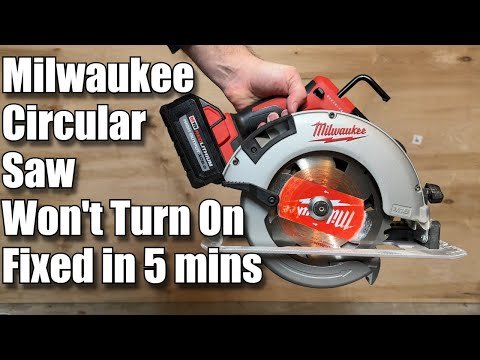
Makita Circular Saw Blade Won’t Spin: Quick Fixes That Work
A Makita circular saw blade won't spin when power, the switch, motor, brake, or blade assembly has a fault.
A Makita circular saw blade won't spin for several reasons, from a dead battery or loose power cord to a jammed blade, failed switch, worn brushes, or a damaged motor. The safest fix starts with a simple inspection and moves toward electrical testing only when needed. This guide explains how to find the fault without guessing, damaging the saw, or putting your hands near a moving blade.
Safety first before troubleshooting
Unplug a corded Makita saw before inspecting it. Remove the battery from a cordless model, then press the trigger once to release any stored charge in the circuit.
Never test the blade with your fingers. Even a blade that seems stuck can move if the switch or motor suddenly works. Wear safety glasses and use gloves only when handling a removed blade, not when operating the saw.
Keep these safety rules in mind:
• Do not bypass the trigger switch or blade guard.
• Do not hold the trigger down while checking the blade.
• Do not use a metal tool across battery terminals.
• Do not open a battery pack.
• Do not operate the saw if the cord, plug, housing, or guard is damaged.
Makita manuals typically advise removing the battery or disconnecting the power before blade changes, cleaning, and service. That rule matters here because a Makita circular saw blade won't spin problem can change suddenly during testing.
Check the power source first
A weak power source is one of the fastest causes to rule out. On a cordless Makita circular saw, install a fully charged battery that matches the saw’s voltage and battery platform.
Check the following:
• Confirm that the battery clicks fully into place.
• Inspect the battery contacts for dirt, dust, or damage.
• Test the saw with another known-good battery.
• Check whether the battery fuel gauge flashes an error.
• Allow an overheated battery to cool before testing again.
Lithium-ion batteries can shut down under heavy load, low charge, high heat, or an internal fault. The battery may show some charge and still fail to supply enough current for the motor.
For a corded Makita saw, inspect the entire power path:
• Test the wall outlet with another tool.
• Reset a tripped GFCI or circuit breaker.
• Inspect the plug for bent or burned prongs.
• Check the cord for cuts, crushed areas, or exposed wire.
• Avoid extension cords that are too long or too light for the saw.
If the saw makes no sound at all, power delivery or the trigger is a strong suspect. If it clicks, hums, or briefly starts, the problem may be mechanical, electrical, or related to overload protection.

Inspect the blade and arbor
A jammed blade can make it seem as if the motor has failed. Disconnect power, then turn the blade by hand while keeping clear of the teeth. It should move with steady resistance, not lock in one spot or scrape badly.
Look for:
• Wood packed between the blade and the guard
• A bent or warped blade
• A loose arbor bolt
• A missing or incorrectly placed washer
• A damaged arbor flange
• A blade installed backward
• Resin, pitch, or rust around the arbor
A blade can bind when it enters wet wood, twisted lumber, nails, screws, or a narrow cut. A damaged blade may also touch the lower guard or shoe. If the blade is bent, replace it rather than trying to straighten it.
The arbor bolt should be secure, but overtightening can damage the blade assembly or make future removal difficult. Use the wrench supplied with the saw and follow the tightening direction shown in the manual. Do not use an impact driver on the arbor bolt.
If the blade spins freely by hand but the Makita circular saw blade won't spin when you pull the trigger, the fault is likely upstream of the blade. That points toward the battery, cord, switch, brake, brushes, control board, or motor.

Look for a locked blade guard
The lower blade guard must move smoothly and return over the blade when released. Dust, chips, or a bent guard can stop it from opening as the saw enters the cut.
With the saw disconnected:
-
Pull the lower guard back slowly.
-
Release it and watch whether it returns fully.
-
Check the guard lever and spring for damage.
-
Remove packed sawdust with a dry brush or compressed air.
-
Look for cracks or rubbing around the guard.
Do not force a guard that sticks. Do not tie it open. The guard protects you from the blade during transport, setup, and kickback.
A guard problem alone may not stop the motor on every Makita model. However, it can hold the blade against the workpiece or cause enough friction to trigger the saw’s protection system. It is also a clear reason to stop using the tool until the issue is fixed.

Understand the trigger, brake, and lock
Many Makita circular saws have a safety lock button near the trigger. Pressing the trigger without releasing this lock may do nothing. Check the owner’s manual because lock locations vary by model.
A saw with an electric brake may stop the blade soon after the trigger is released. That brief stop is normal. The brake should not prevent the blade from starting again when the trigger is pulled.
Signs of a trigger or brake fault include:
• The saw works only when the trigger is pressed at a certain angle.
• The motor starts after repeated trigger pulls.
• The blade stops, but the motor keeps making an odd sound.
• The saw works intermittently.
• There is a burnt smell near the trigger housing.
Do not spray oil or contact cleaner into the trigger unless the manufacturer specifically permits it. Liquids can damage contacts, insulation, or electronic parts.
A failed switch is not a good do-it-yourself bypass repair. The switch controls a high-current motor, and an incorrect replacement can create a shock, fire, or runaway tool hazard. Use the exact replacement part for the model or have an authorized repair center test it.
Check for overload or thermal protection
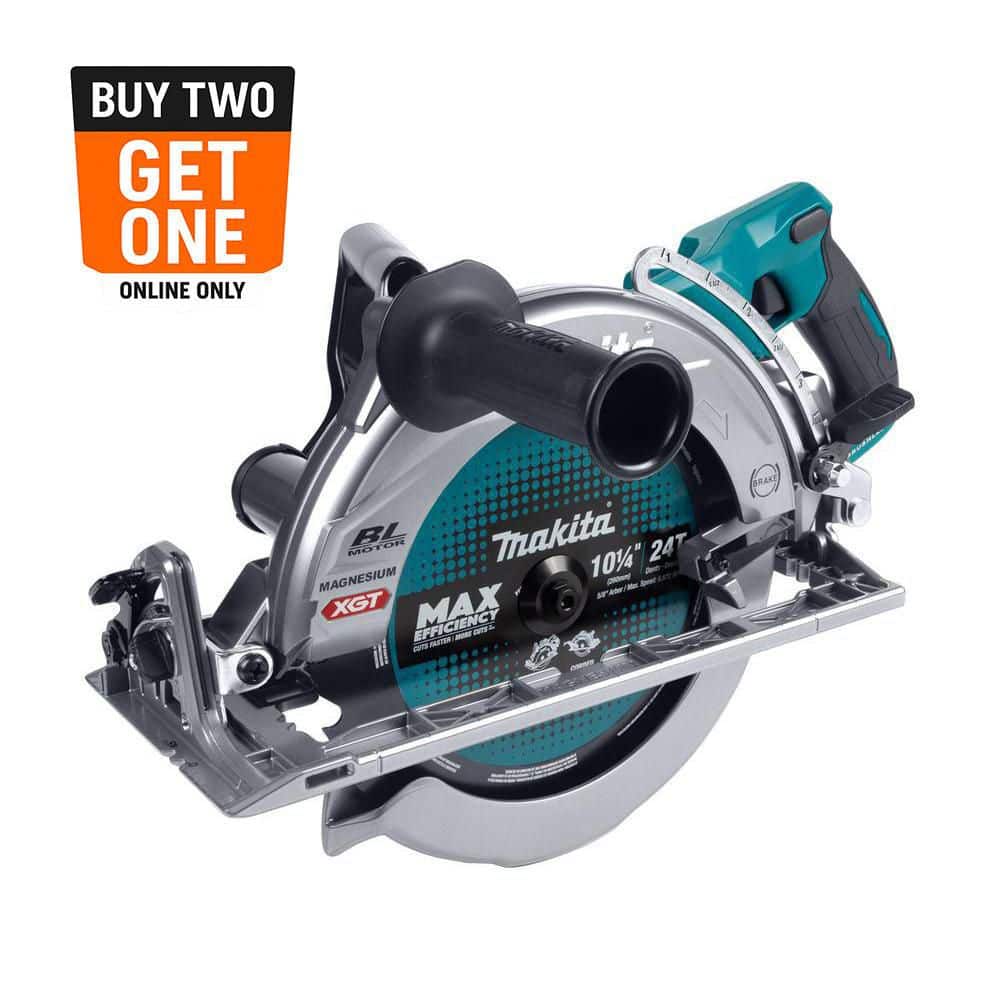
Modern cordless saws often include electronic protection. The system may stop the motor when the blade binds, the load is too high, the battery is too hot, or the tool begins to overheat.
If the Makita circular saw blade won't spin after a hard cut, take these steps:
• Release the trigger.
• Remove the battery or unplug the saw.
• Clear the blade from the material.
• Let the saw cool for 15 to 30 minutes.
• Inspect the blade for binding or damage.
• Try a fully charged battery or a proper outlet.
Do not keep pulling the trigger during an overload. Repeated attempts can heat the motor, contacts, and control electronics.
Cutting technique also affects overload protection. Use a sharp blade made for the material, support the workpiece well, and allow the saw to reach full speed before entering the cut. Pushing too hard is like asking a small car to climb a steep hill in the wrong gear. The tool may stop to protect itself.
If the saw resets after cooling but stops again during light work, the cause may be a worn motor, failing battery, blocked ventilation, or electronic fault.

Inspect brushes and motor symptoms
Some corded Makita circular saws use replaceable carbon brushes. Brushless models do not use standard carbon brushes, so do not open a brushless saw expecting to find them.
Worn brushes may cause:
• No motor response
• Intermittent starting
• Heavy sparking
• A burning odor
• Reduced power
• A motor that runs only after tapping the housing
Large sparks, smoke, or a strong electrical smell mean you should stop immediately. A small amount of brush arcing can occur in some brushed motors, but it should not be severe or continuous.
If your model has brush caps, inspect or replace the brushes only as described in the manual. Replace both brushes as a matched pair when required. A brush that is too short, cracked, or stuck in its holder can prevent the motor from running.
Brush replacement is not the right diagnosis for every Makita circular saw blade won't spin case. Cordless brushless models may have a control board, Hall sensor, motor, or battery communication issue instead. Those faults usually need model-specific testing.

Decide whether the motor or control board failed
If the battery, cord, blade, guard, and trigger appear normal, the motor or electronic control system may be at fault. Cordless saws can use electronic speed control and overload circuits that are not easy to test with a basic household meter.
Possible internal faults include:
• Open motor windings
• A damaged armature
• Failed field coils
• Worn commutator segments
• A failed electronic controller
• Damaged battery contacts
• Broken internal wiring
• A faulty brake circuit
A humming motor with no blade movement may indicate a locked armature, failed bearings, or a mechanical drive problem. A completely silent tool may have an open switch, disconnected wire, control board failure, or no power.
Do not test live internal parts unless you are trained to work safely around mains voltage. Corded saws can expose you to serious shock. Battery tools can also produce high current, heat, and sparks even though they do not plug into a wall.
At this stage, compare repair cost with replacement cost. An older saw with a failed control board may cost more to repair than a dependable new tool. A simple cord, switch, brush, or battery replacement may be worthwhile.

A practical diagnosis sequence
Use this order to avoid replacing good parts:
-
Disconnect the saw and remove the battery.
-
Check the blade for binding, damage, and correct installation.
-
Confirm that the lower guard moves freely.
-
Test a known-good battery or wall outlet.
-
Check the battery contacts, plug, and cord.
-
Confirm the safety lock and trigger operate normally.
-
Let the saw cool if it stopped under heavy load.
-
Inspect accessible brush caps if the model uses brushes.
-
Stop and seek service if the saw sparks, smells burnt, or shows internal damage.
One useful lesson from tool repair is to change only one thing at a time. If you replace the battery, blade, and switch together, you may fix the symptom but never learn the cause. A step-by-step test saves money and makes the next repair much easier.
Keep the model number nearby. Makita makes many circular saws, and parts, battery systems, brush layouts, and diagnostic lights can differ. The model label is often on the housing, battery slot, or rating plate.
Mistakes that can make the problem worse
When a Makita circular saw blade won't spin, frustration can lead to unsafe shortcuts. Avoid these common mistakes:
• Do not force the blade with pliers.
• Do not use the saw with the lower guard tied open.
• Do not install a blade with the wrong arbor size.
• Do not use a damaged or heavily warped blade.
• Do not spray lubricant into the motor or trigger.
• Do not bypass the safety switch.
• Do not keep using the saw after smoke or burning odor.
• Do not fit an unapproved battery adapter.
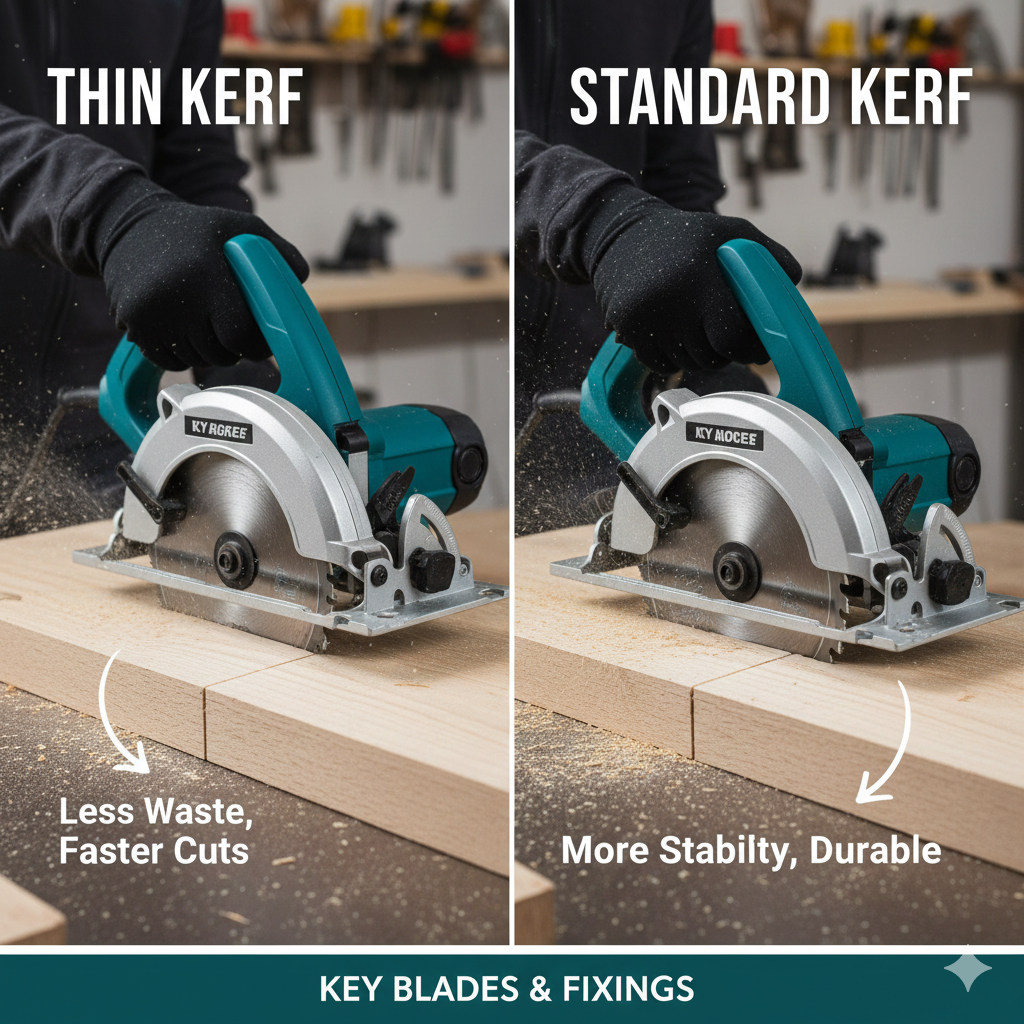
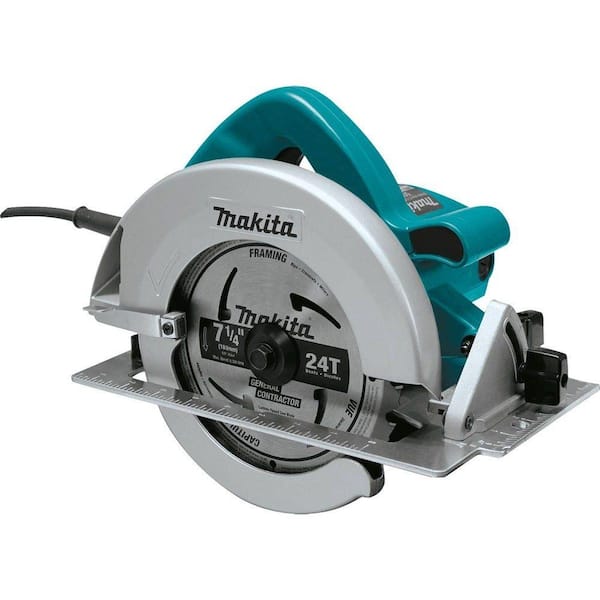
The wrong blade can also create a false mechanical problem. A blade with the wrong diameter, tooth type, kerf, or arbor hole may bind or overload the saw. Choose a blade that matches the saw’s specifications and the material being cut.
Clean ventilation openings with a dry brush or low-pressure air. Blocked vents trap heat and can cause repeated shutdowns. Never use water inside the tool.
When professional repair is the best option
Take the saw to an authorized Makita service center or a qualified tool repair technician when:
• The saw has a burnt smell or visible smoke.
• The cord or plug is damaged.
• The motor hums but does not turn.
• The tool trips a breaker.
• The battery becomes unusually hot.
• The housing is cracked after a fall.
• The saw stops even with a good battery and free blade.
• You suspect a control board or internal wiring fault.
Service is especially important for corded tools because internal mains voltage can remain dangerous during testing. For cordless tools, a technician can check motor current, battery communication, switch continuity, and controller operation with the correct equipment.
Makita’s official manual for your exact model should take priority over general advice. Product designs change, and a test that is safe on one model may not apply to another. If the tool is under warranty, opening the housing may also affect warranty service.
Frequently asked questions about Makita circular saw blade won't spin
Why is my Makita circular saw completely silent?
A completely silent saw may have a dead battery, faulty outlet, damaged cord, failed trigger, open wiring, or control board problem. Test the power source first, then stop if the tool shows burning, smoke, or electrical damage.
Why does my Makita saw make a clicking or humming sound?
A click may come from overload protection, while a hum can point to a locked motor, seized bearing, or electrical fault. Disconnect the saw and check whether the blade turns freely by hand before seeking service.
Can a bad blade stop a Makita circular saw from spinning?
Yes. A bent blade, packed wood chips, incorrect washer placement, or damaged arbor can bind the blade. Remove power, inspect the blade assembly, and replace damaged parts instead of forcing the blade.
How do I reset a Makita cordless circular saw?
Release the trigger, remove the battery, and let the saw and battery cool. Check for binding, install a charged battery, and test again; if it repeatedly shuts down, the tool needs further diagnosis.
Should I replace the carbon brushes?
Replace carbon brushes only if your specific Makita model uses them and the brushes are worn, cracked, or stuck. Brushless models do not use standard replacement brushes, so a no-spin problem may involve the motor or electronic controller.
Is it safe to bypass the Makita trigger switch?
No. Bypassing the trigger can defeat safety controls and cause unexpected startup, shock, or fire. Replace the switch with the correct part or have a qualified technician repair the tool.
Why does the saw spin freely by hand but not with the trigger?
That usually means the blade is not mechanically locked, so check the battery, cord, switch, brake circuit, brushes, motor, and control board. A free-spinning blade does not prove that the electrical system is healthy.
Conclusion
A Makita circular saw blade won't spin because of a power problem, blade bind, guard issue, trigger fault, overload shutdown, worn brushes, or internal motor electronics. Start with the battery or outlet, inspect the blade safely, and work through each simple cause before considering internal repairs.
Never bypass a safety feature or keep using a saw that sparks, smokes, smells burnt, or trips a breaker. Use the exact Makita manual for your model, and contact qualified service when the fault reaches the switch, motor, or control board. If this guide helped, share your model and symptoms in the comments or explore more circular saw maintenance advice.