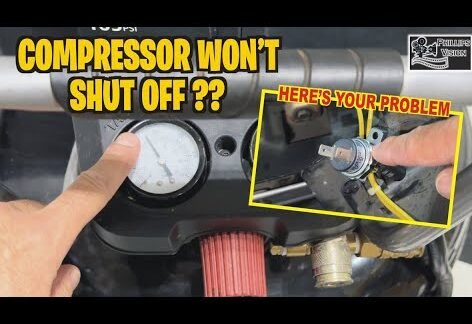
Air Compressor Won’t Shut Off: Causes And Easy Fixes
An air compressor that will not shut off usually has an air leak, pressure switch fault, or pump problem.
When an air compressor won’t shut off, it is often trying to reach its cut-out pressure but cannot do so. The cause may be simple, such as a loose hose fitting, or serious, such as a worn pump, faulty check valve, or incorrect pressure setting. This guide explains how to find the problem safely, what you can repair yourself, and when professional service is the better choice.
Why an Air Compressor Won’t Shut Off
An air compressor runs until the tank reaches its cut-out pressure. The pressure switch should then stop the motor. If the motor keeps running, one of two things is happening:
• The tank cannot reach the required pressure.
• The tank reaches pressure, but the control system does not stop the motor.
Most compressors use a cut-in and cut-out range. For example, a small shop compressor may start at 90 PSI and stop at 120 PSI. These values vary by model, so always check the data plate or owner’s manual.
If an air compressor won’t shut off, do not let it run for hours while you wait for the pressure to rise. Continuous operation can overheat the motor, damage the pump, and shorten the life of the compressor.
Common Reasons an Air Compressor Keeps Running
Air leaks in the system
An air leak is one of the most common reasons an air compressor won’t shut off. Even a small leak can waste enough air to keep the pump running.
Check these areas first:
• Hose connections
• Quick-connect fittings
• Pipe joints
• Drain valve
• Pressure regulator
• Safety relief valve
• Tank outlet
• Air tools connected to the system
You can find many leaks with a small amount of dish soap mixed with water. Brush or spray the mixture around each connection while the tank is pressurized. Growing bubbles show where air is escaping.
Do not use your hands to search for a leak. Compressed air can enter the skin through a tiny cut and cause a serious medical emergency.
The pressure switch is faulty
The pressure switch controls when the compressor starts and stops. It senses tank pressure through a small tube or port. When pressure reaches the cut-out setting, electrical contacts inside the switch should open.
A worn pressure switch may have:
• Burned electrical contacts
• A blocked pressure-sensing port
• A broken internal spring
• Incorrect adjustment
• A damaged diaphragm
If an air compressor won’t shut off even after reaching normal tank pressure, the pressure switch is a strong suspect. Never adjust the switch unless you understand the manufacturer’s instructions. A wrong setting can exceed the tank’s safe working pressure.
The check valve is leaking
The check valve lets air move into the tank but prevents tank air from flowing backward into the pump. If it leaks, the pump may struggle to build pressure.
A leaking check valve can also cause:
• Air escaping through the unloader tube
• Hard motor starts
• A loud hiss after shutdown
• Repeated tripping of the overload protector
With the compressor unplugged and the tank fully drained, the check valve can often be removed and inspected. Some valves can be cleaned, but a damaged valve usually needs replacement.
The pump is worn
A compressor pump loses efficiency as its piston rings, valves, or cylinder wear. The motor may run normally, but the pump cannot compress enough air to reach the cut-out pressure.
Signs of a worn pump include:
• Slow pressure buildup
• Low maximum pressure
• Excessive oil use on an oil-lubricated model
• Oil in the air stream
• Unusual knocking or rattling
• High pump temperature
A worn pump is more likely on an older compressor that has seen heavy use. It may also result from poor lubrication, dirty intake air, or running beyond the duty cycle.
The intake filter is blocked
The pump needs a steady supply of air. A clogged intake filter reduces airflow and may prevent the tank from filling.
Remove the filter and inspect it for dust, sawdust, oil, or dirt. Replace disposable filters according to the manual. Clean reusable filters only as directed by the manufacturer.
Do not operate a compressor for long without its filter. Dirt can enter the pump and cause rapid wear.
The intake or discharge valve is damaged
Piston compressors use valves to control airflow into and out of the cylinder. A broken reed valve, carbon buildup, or damaged valve plate can reduce compression.
This problem may cause the air compressor to run continuously while producing little pressure. The pump may also become hotter than normal.
Valve repair requires partial pump disassembly on many models. If you are not comfortable working on compressor valves, have a qualified technician inspect the unit.
The compressor is undersized for the job
Sometimes the compressor is working as designed. A high-demand air tool may use more air than the compressor can produce.
For example, an impact wrench may work well with a small tank, while a die grinder, sander, or spray gun may require continuous airflow. Compare the tool’s required CFM at its stated PSI with the compressor’s delivered CFM.
Tank size affects how long a tool can run before the motor starts. It does not increase the pump’s continuous air output.

How to Diagnose an Air Compressor That Will Not Shut Off
Use a calm, step-by-step process. Guessing can lead to unnecessary parts replacement or unsafe pressure changes.
Step 1: Stop and inspect the compressor
Turn the compressor off. Unplug it, then allow the pump to cool. Check the tank pressure on the gauge.
Look for obvious problems:
• A damaged hose
• A loose fitting
• A leaking drain valve
• Oil around the pump
• Burn marks near the pressure switch
• A blocked intake filter
If the tank pressure is rising slowly, focus on leaks, airflow, valves, and pump condition. If pressure reaches the rated cut-out but the motor continues, focus on the pressure switch and electrical controls.
Step 2: Test for leaks
Drain the tank until the pressure is low enough to work safely, then tighten loose fittings. Pressurize the system again and apply soapy water to every connection.
Pay special attention to the tank drain valve. A drain valve that is only slightly open can keep an air compressor running for a long time.
Also test the hose and tool. Disconnect the air tool and cap the outlet. If the compressor now shuts off, the tool or hose may be leaking.
Step 3: Watch the pressure gauge
Observe the gauge while the compressor runs.
• Pressure rises normally, then the motor keeps running: suspect the pressure switch.
• Pressure rises very slowly: suspect a leak, dirty filter, bad valve, or worn pump.
• Pressure stops at a low value: suspect a pump, valve, or gasket problem.
• Pressure rises and falls while the motor runs: suspect a major leak or check valve issue.
Compare the pressure with the compressor’s rated maximum. Do not rely only on a gauge that may be damaged or inaccurate.
Step 4: Listen for unusual sounds
Sound can provide useful clues. A steady hiss often points to a leak. A sharp hiss near the pressure switch after shutdown may come from the unloader system. A knocking sound may indicate pump wear or a loose component.
A motor that hums, struggles, or trips a breaker may have an electrical problem. Stop using it until the cause is found.
Step 5: Check the duty cycle
Many portable compressors are not designed to run continuously. A duty cycle of 50 percent means the compressor should run about 30 minutes in an hour, with time to cool.
Running beyond the rated duty cycle can cause overheating. If an air compressor won’t shut off because the tool demand is too high, the long-term solution may be a larger compressor or a lower-air-demand tool.

Safety Steps Before Repairing a Compressor
Compressed air stores a large amount of energy. Treat the tank like a loaded spring that can release force without warning.
Before inspecting or repairing the unit:
-
Turn the power switch off.
-
Unplug the compressor or disconnect its electrical supply.
-
Close the air outlet valve.
-
Drain the tank completely through the drain valve.
-
Wait for hot parts to cool.
-
Confirm that the pressure gauge reads zero.
-
Follow the owner’s manual.
Never drill, weld, grind, or modify an air tank. Rust inside a tank can weaken the metal even when the outside looks acceptable. A damaged or badly corroded tank should be removed from service.
The Occupational Safety and Health Administration treats compressed air as a serious workplace hazard. Basic precautions include using the correct fittings, wearing eye protection, and never directing compressed air at your body or another person.

Repairs You May Be Able to Make
Some causes of an air compressor that won’t shut off are simple to correct.
Tighten or replace leaking fittings
Use the correct thread sealant for the fitting type. Do not cover the first thread if the fitting enters the tank or pressure switch. Avoid over-tightening, since it can crack aluminum parts or damage threads.
Replace damaged hoses, quick-connects, and drain valves rather than trying to patch them with tape.
Clean or replace the intake filter
A clean filter helps the pump draw air efficiently. Use the correct replacement part and install it securely.
If the compressor operates in a dusty shop, inspect the filter more often. Wood dust, drywall dust, and metal particles can clog a filter quickly.
Replace a faulty check valve
A check valve is often inexpensive, but the repair must be done with the tank empty. Use the correct replacement and apply sealant only where the manual allows it.
After installation, listen for air escaping from the unloader tube when the motor is running. Persistent hissing may indicate another fault.
Replace the pressure switch
Pressure switch replacement involves electrical wiring and pressure settings. Take a clear photo of the wiring before removal, and use a switch with the same pressure range, voltage rating, and port configuration.
Do not bypass the pressure switch. It is a key safety and control component.

When to Call a Professional
Stop troubleshooting and seek qualified service if:
• The tank has deep rust, cracks, dents, or leaks.
• The motor trips the breaker repeatedly.
• The wiring is burned or melted.
• The pump overheats quickly.
• The compressor exceeds its rated pressure.
• The pressure switch contacts are badly damaged.
• You hear hard knocking from the pump.
• You are unsure how to discharge electrical components.
A professional can test the pressure switch, motor current, check valve, pump compression, and tank condition. This can cost less than replacing several parts through trial and error.
One mistake I have seen often is replacing the pressure switch before checking for a leaking drain valve. The new switch does not fix the leak, and the compressor continues to run. Start with simple external checks before opening the pump or changing electrical parts.

How to Prevent the Problem
Good maintenance helps prevent an air compressor from running nonstop.
Follow these habits:
• Drain moisture from the tank after use.
• Check fittings and hoses every few weeks.
• Clean the intake filter on schedule.
• Change pump oil at the recommended interval.
• Use the correct oil for oil-lubricated models.
• Keep cooling fins clean.
• Respect the compressor’s duty cycle.
• Use air tools within the rated CFM.
• Test the safety relief valve only as the manual directs.
• Inspect the tank for rust and damage.
Moisture is a major enemy of steel tanks and air lines. In humid areas, drain the tank more often. An automatic drain can help, but it still needs inspection and maintenance.
Keep a simple service record. Note the date, tank pressure, oil change, filter replacement, and any unusual sounds. Small changes are easier to spot when you know how the compressor normally behaves.

What the Pressure Switch and Unloader Do
These two parts are often confused.
The pressure switch starts and stops the motor. It uses tank pressure to control the electrical circuit. The cut-in setting starts the motor, while the cut-out setting stops it.
The unloader valve releases pressure from the pump discharge line when the motor stops. This allows the motor to start without fighting trapped air. The short hiss heard after shutdown is usually normal.
If the hissing continues while the compressor runs, the unloader tube, check valve, or pressure switch may have a problem. If the motor cannot restart and only hums, trapped head pressure may be the cause.
Never increase the cut-out pressure simply to make the compressor store more air. The tank, pump, switch, and safety valve must all be designed for that pressure.

Understanding Compressor Limits
An air compressor won’t shut off when demand is greater than supply. This is not always a defect.
Check these three ratings:
• CFM delivered by the compressor at a specific PSI
• CFM required by the air tool
• Duty cycle of the compressor
A tool may list average and maximum air use. Use the higher figure when planning a system. Also account for pressure loss through long hoses, small fittings, filters, and regulators.
For continuous tools, choose a compressor that can deliver more air than the tool needs. A small reserve helps the system recover without constant operation.
A larger tank can reduce start and stop frequency, but it cannot repair a weak pump or fix a leak. Think of the tank as a bucket and the pump as a faucet. A bigger bucket stores more air, but a weak faucet still fills it slowly.

Frequently Asked Questions About an Air Compressor Won’t Shut Off
Why does my air compressor keep running but not build pressure?
A leak, blocked intake filter, damaged valve, worn piston ring, or failed gasket may prevent pressure from rising. Disconnect the air tool, check for leaks with soapy water, and watch whether the gauge rises slowly or stops at a low pressure.
Is it safe to let an air compressor run continuously?
Only if the model is rated for continuous duty and it remains within its temperature and pressure limits. A portable compressor may overheat if it runs nonstop, so follow the stated duty cycle and stop it if the motor or pump becomes unusually hot.
Why does my compressor stop at low pressure?
A faulty pressure switch, blocked check valve, worn pump, or damaged valve may limit pressure. Compare the gauge reading with the manufacturer’s rated pressure before replacing any parts.
Why does my air compressor hiss after it shuts off?
A brief hiss from the unloader valve is normal because it releases pressure from the pump head. Continuous hissing may indicate a leaking check valve, unloader tube, fitting, or pressure switch.
Can a bad pressure switch cause an air compressor not to shut off?
Yes. If the pressure switch does not open its electrical contacts at the cut-out pressure, the motor may continue running. Replace it only with a properly rated part, and do not bypass it.
Can low oil cause an air compressor to run constantly?
Low oil can increase friction, heat, and pump wear on an oil-lubricated compressor. It may reduce compression, but adding oil will not fix worn rings, damaged valves, or an air leak.
Conclusion
An air compressor that will not shut off needs attention, but the cause is often easy to narrow down. Start with air leaks, the drain valve, intake filter, pressure gauge, and tool demand. Then inspect the check valve, pressure switch, and pump if the basic checks do not solve the issue.
Always disconnect power, drain the tank, and respect the pressure inside the system. With steady testing instead of guesswork, you can often find the fault before it damages the motor or pump. Use your compressor’s manual for exact settings, and leave tank or electrical repairs to a qualified professional when safety is uncertain. Share your compressor model and symptoms in the comments, or explore more maintenance guides to keep your equipment reliable.



One Comment