Miter Saw Trigger Not Working: Quick Fixes
A miter saw trigger often stops working because of a jammed switch, damaged cord, faulty lock, or worn motor brush.
A miter saw trigger not working can bring a simple cut to a full stop, but the cause is often easier to find than it seems. With the right checks, you can separate a power problem from a trigger fault without guessing or replacing good parts. This guide explains safe tests, common causes, repair options, and the point where a professional should take over.
Start With Safety
Before checking a miter saw trigger not working, unplug the saw from the wall. If it uses a battery, remove the battery pack. Never test a trigger with the blade exposed and the tool connected to power.
A miter saw can start without warning if a damaged switch suddenly makes contact. Keep your fingers away from the trigger, blade, and arbor area during every inspection.
Use these safety steps first:
• Unplug the power cord or remove the battery.
• Let the blade stop fully before touching the saw.
• Wear safety glasses when cleaning dust or checking moving parts.
• Do not bypass the trigger or connect wires together to “test” the motor.
• Use the owner’s manual for your exact model.
Power tool makers design trigger locks, blade guards, and switches as safety parts. Removing or bypassing one of them can create a serious injury risk. The Occupational Safety and Health Administration also stresses disconnecting power before servicing equipment.

Why Your Miter Saw Trigger Is Not Working
A miter saw trigger not working may come from the trigger itself, but the trigger is only one part of the control system. The saw may also have a lock button, electronic brake, power cord, motor, carbon brushes, or circuit board.
The most common causes include:
• The saw is not receiving power.
• The trigger lock is stuck or not fully released.
• Dust or wood chips are blocking the trigger.
• The power cord has an internal break.
• The trigger switch has worn contacts.
• Carbon brushes are worn down.
• The motor has overheated.
• A thermal overload protector has opened.
• A battery is empty, damaged, or not seated correctly.
• A control board has failed on a brushless or electronic model.
A useful rule is to start with the easiest cause. Check the outlet, cord, battery, and lock before opening the housing. Many wasted repairs begin when a user replaces the switch before checking the power source.
Check the Power Source First
When a miter saw trigger not working problem appears, test the power source before touching the trigger. Plug another tool into the same outlet. If that tool also fails, reset the circuit breaker or ground fault circuit interrupter.
For a corded saw, inspect the full cord. Look for cuts, crushed areas, burn marks, loose plugs, or sections that feel unusually soft. A cord can break inside the insulation after years of bending, even when the outside looks fine.
For a cordless saw, check the battery in this order:
-
Remove and reinstall the battery firmly.
-
Charge it with the correct charger.
-
Check the battery terminals for dirt or damage.
-
Test the saw with a known-good battery made for that model.
-
Look for a flashing error light on the battery or charger.
Do not use a battery with a swollen case, melted plastic, leaking cells, or a strong chemical smell. Place it in a safe area and follow local battery recycling rules.

Inspect the Trigger Lock
Most miter saws have a trigger lock or safety button. It prevents accidental startup when the saw is carried or stored. If the lock sticks, the trigger may feel normal but still fail to engage.
Press the lock several times with the saw unplugged. Notice whether it moves smoothly and springs back. A lock that feels gritty, loose, or stuck may have dust inside or a damaged spring.
Clean the area with a soft brush or dry compressed air. Hold the tool so dust moves away from the switch. Avoid spraying oil or household cleaner into the trigger. Liquids can damage electrical contacts and attract more fine dust.
If the lock is cracked or does not return to its normal position, replace the trigger assembly. Do not tape the lock down. That removes a safety feature and can allow an accidental start.
Look for Dust and Physical Damage
Fine sawdust acts like flour. It can enter the trigger housing and stop small parts from moving. This is common when a saw is used for trim, MDF, plywood, or repeated crosscuts.
With power disconnected, inspect:
• The trigger opening
• The lock button
• The handle
• The cord entry point
• The motor vents
• The blade guard area
Use a soft brush or a vacuum designed for workshop dust. Do not push debris deeper into the switch with a sharp object. Do not use high-pressure air near sealed bearings or sensitive electronics.
Also check for signs of impact. A fall can crack the handle, bend the trigger, or shift the switch inside the housing. If the trigger moves too far, feels loose, or does not spring back, the switch may have broken internally.
Test the Power Cord and Plug
A damaged cord is a frequent cause of a miter saw trigger not working. The cord carries power to the switch, so an internal break can make the trigger seem faulty.
Unplug the saw and gently bend the cord near the plug, strain relief, and saw housing. Do not bend it sharply or try to make the motor run. You are only checking for visible damage and loose movement.
If you know how to use a multimeter safely, you can check cord continuity with the saw disconnected from power. Set the meter to continuity or resistance, and follow the meter instructions. A qualified repair person should do this test if you are not familiar with electrical tools.
Replace a damaged cord with the correct part for the saw. Do not repair a cut cord with tape. Do not use a lighter-duty extension cord than the tool requires. Long or undersized cords can cause voltage drop, heat, and poor motor performance.

Check for Motor Overload
Some saws stop after heavy use because the motor becomes too hot. A thermal protector may open the circuit and make the trigger appear dead. This feature helps prevent motor damage.
Unplug the saw and let it cool for 20 to 30 minutes. Clear dust from the motor vents and check that the blade spins freely by hand. Keep the plug disconnected while doing this.
A dull blade, wrong blade type, or forced cut can overload the motor. Cutting wet wood, thick hardwood, or dense composite material can also increase heat. Feed the blade at a steady pace and let the teeth do the work.
If the saw works again after cooling but stops often, do not treat that as a permanent fix. Repeated overheating may point to worn brushes, blocked vents, a failing motor, or an electrical problem.
:max_bytes(150000):strip_icc()/1023353-8d00089f29cf4d34b4fed20fcc9dba0b.jpg)
Check the Carbon Brushes
Many corded miter saws use carbon brushes to transfer electricity to the spinning motor. These brushes wear down over time. When they become too short, the saw may cut out, spark, run weakly, or fail when you pull the trigger.
Symptoms of worn brushes include:
• The motor works only when the handle is moved.
• The saw runs on and off.
• You see heavy sparking through the vents.
• The motor smells hot or burnt.
• The trigger feels normal, but the motor stays silent.
Brush replacement varies by model. Unplug the saw, remove the brush caps if the manual allows it, and compare the old brushes with the replacement parts. Replace both brushes as a matched pair.
Do not keep using a saw that produces large sparks, smoke, or a burnt smell. Small brush sparks can be normal in some brushed motors, but heavy arcing is not. A technician should inspect the armature and motor if that happens.
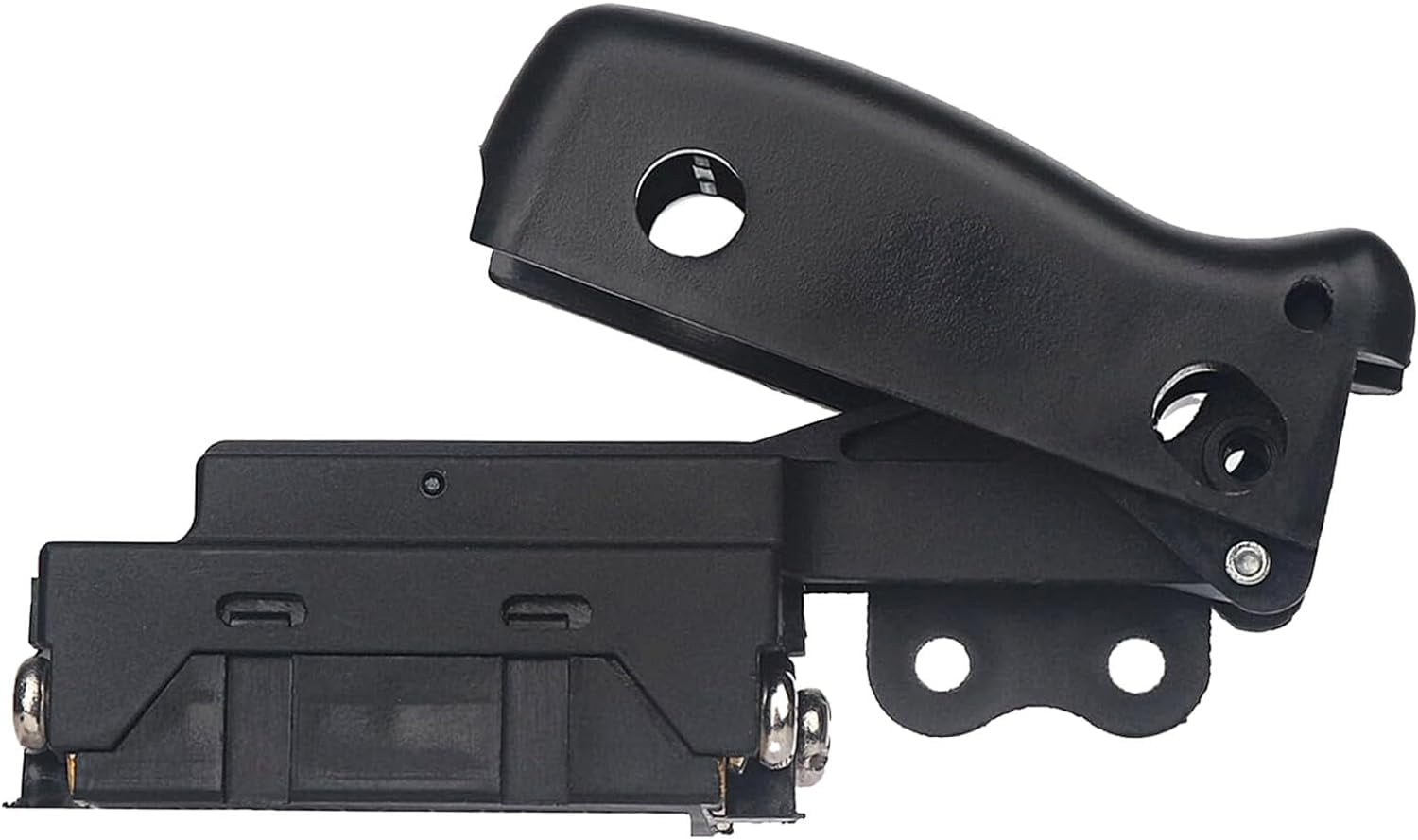
Test or Replace the Trigger Switch
If the outlet, cord, battery, lock, and motor all check out, the switch may be the problem. A worn trigger switch can develop burned contacts or a broken internal spring.
Common signs include:
• The trigger feels loose or has no spring action.
• The saw runs only when you press the trigger in a certain spot.
• The trigger sticks after release.
• The lock moves, but the motor never responds.
• The switch has a burnt smell or melted plastic.
Some experienced users can replace a switch by following the model’s service manual. Take photos before removing wires, label each connection, and use the exact replacement part. Never rely on wire color alone, because colors and layouts vary by brand and model.
If the switch is part of an electronic control board, replacement may require special testing. In that case, a service center is the safer choice. A new trigger will not fix a damaged control board, motor, or safety circuit.
Diagnose a Cordless Miter Saw
A cordless miter saw trigger not working can involve battery communication as well as the trigger. Modern battery tools may use electronic protection against low voltage, excess current, heat, or incompatible packs.
Try the following:
• Clean the battery contacts with a dry cloth.
• Charge the battery fully.
• Allow a hot battery to cool.
• Test another approved battery.
• Check whether the battery indicator shows a fault.
• Inspect the trigger lock and electronic brake controls.
Never connect loose wires to the battery terminals. Lithium-ion packs can deliver high current very quickly. A short circuit can cause burns, fire, or cell damage.
If another battery works, the original battery may be at fault. If no battery works and the saw shows no lights or sound, the issue may be the trigger module, control board, or internal connection.
When a Miter Saw Trigger Needs Professional Repair
Stop troubleshooting and seek qualified service when you find smoke, melted wires, a burnt circuit board, or repeated breaker trips. These signs can point to a short circuit or serious motor fault.
Professional repair is also wise when:
• The saw has electronic speed control.
• The housing must be opened near live wiring.
• The motor smells burnt.
• The blade binds even when the saw is unplugged.
• You cannot identify the correct replacement switch.
• The tool is under warranty.
A repair shop can use the correct wiring diagram, insulation tests, and manufacturer parts. This can cost more than a simple switch replacement, but it reduces the risk of electrical shock and repeat failure.
My biggest lesson with trigger problems is simple: do not rush to open the handle. A five-minute outlet and cord check often saves an hour of unnecessary repair work. The trigger is the visible part, but the real fault may be several inches away.
How to Prevent Trigger Problems
Good care can reduce the chance of a miter saw trigger not working later. Keep the saw clean, dry, and free from heavy dust. Use dust collection when possible, especially while cutting MDF or other fine materials.
Follow these habits:
• Unplug the saw before cleaning or changing the blade.
• Store it in a dry place.
• Do not carry the saw by its power cord.
• Keep the cord away from the blade and workpiece.
• Use sharp blades made for the material.
• Avoid forcing the blade through a cut.
• Check vents and guards before each use.
• Replace damaged cords and safety parts at once.
• Follow the service schedule in the manual.
A trigger should feel smooth and predictable. If it begins to stick, delay, or work only at one angle, treat that as an early warning. Small electrical symptoms often become larger failures when ignored.
Common Mistakes to Avoid
Many users make the same mistakes when a miter saw trigger not working issue appears. The first is repeatedly pulling the trigger in hope that the motor will suddenly start. This can worsen worn contacts and create heat inside the switch.
Other mistakes include:
• Spraying lubricant into the electrical switch.
• Bypassing the trigger lock.
• Using a random replacement switch.
• Testing a damaged cord while the saw is plugged in.
• Reinstalling wires without taking a photo.
• Using a battery that is not approved for the tool.
• Ignoring a burning smell or heavy sparks.
• Replacing the trigger before testing the power supply.
A safe diagnosis is usually slow and simple. Disconnect power, inspect the outside, test the source, and move inward only when each earlier step passes.
Frequently Asked Questions About Miter Saw Trigger Not Working
Why is my miter saw trigger not working but the blade moves freely?
The problem may be the power source, trigger lock, switch, cord, battery, or motor brushes. Check the outlet or battery first, then inspect the lock and cord with the tool disconnected.
Can sawdust stop a miter saw trigger from working?
Yes. Fine dust can block the trigger lock or prevent internal switch parts from moving. Clean the area with a soft brush or gentle vacuum, and never spray liquid into the switch.
How do I know if the miter saw trigger switch is bad?
A bad switch may feel loose, stick, fail to spring back, or work only when pressed in one position. A qualified person can confirm the fault with a continuity test after disconnecting the saw from power.
Why does my miter saw work after it cools down?
The motor may be activating a thermal overload protector. A dull blade, blocked vents, worn brushes, heavy material, or a failing motor can cause repeated overheating.
Can I bypass the trigger on a miter saw?
No. Bypassing the trigger or safety lock can cause an unexpected startup and serious injury. Replace the correct part or have the saw inspected by a qualified technician.
Why does my cordless miter saw trigger not work with a charged battery?
The battery may be too hot, damaged, poorly connected, or incompatible with the saw. Test an approved battery and inspect the contacts, but do not bridge battery terminals with wires.
Should I replace the trigger or buy a new miter saw?
Replace the trigger when the saw is otherwise in good condition and the part is available. A new saw may make more sense if the motor, control board, battery system, and switch all need costly repairs.
Conclusion
A miter saw trigger not working does not always mean the trigger has failed. Check the outlet, cord, battery, trigger lock, dust, overload protection, brushes, and switch in that order. Always disconnect power before inspection, and never bypass a safety feature.
Start with the simple checks today. If you find heat damage, smoke, exposed wiring, or a complex electronic fault, stop and use qualified service. Share your model and symptoms in the comments, or explore your manufacturer’s repair guide for the correct parts and testing steps.