Miter Saw Blade Wobbling: Causes And Easy Fixes
A miter saw blade wobbles because of a loose arbor, dirty flange, bent blade, or damaged saw parts.
Miter saw blade wobbling is more than an annoying vibration. It can leave rough cuts, burn marks, poor miters, and unsafe movement near the workpiece. After troubleshooting many saws in the shop, I have found that the cause is often simple: a dirty blade washer, an upside-down blade, or an arbor nut that was not tightened correctly. This guide explains how to find the fault, fix it safely, and prevent it from returning.
What Miter Saw Blade Wobbling Means
A miter saw blade should spin in a smooth, steady circle. A small amount of normal motor sound is expected, but the blade should not visibly move from side to side.
Miter saw blade wobbling means the blade is moving off its intended path as it rotates. This movement may be called lateral runout. Runout is the amount the blade shifts from side to side during one full rotation.
Common signs include:
• A visible side-to-side blade movement
• Rough or uneven cuts
• Burning on the wood
• A cut that is wider than the blade plate
• Strong vibration in the handle or table
• A loud hum or rattling sound
• Teeth that appear to move in an uneven circle
A tiny amount of runout can occur in some tools. However, a clear wobble is not normal. It can damage the blade, lower cut quality, and create a kickback risk.

Is It Safe to Use a Wobbling Miter Saw?
Stop using the saw until you find the cause. A wobbling blade may be loose, cracked, bent, or poorly mounted.
Turn off the saw, unplug it, and wait for the blade to stop fully. If your saw is cordless, remove the battery. Do not rely only on the trigger lock or power switch.
Before inspecting the blade:
• Wear safety glasses
• Keep your hands away from the teeth
• Do not spin the blade with the motor connected
• Support the saw head during inspection
• Read the tool maker’s safety instructions
The Occupational Safety and Health Administration treats saw guarding, stable workpieces, and safe operating practices as key controls for woodworking injuries. A blade guard cannot correct a loose blade or damaged arbor.
In my experience, many users keep cutting because the saw still “works.” That is a mistake. A small wobble can become worse as the blade heats up or the arbor nut loosens further. Treat unusual vibration as an early warning, not a minor fault.

Main Causes of Miter Saw Blade Wobbling
Several parts can create the same symptom. Check them in a logical order, starting with simple problems before replacing expensive parts.
Loose Arbor Nut
The arbor nut holds the blade against the inner and outer washers. If it is loose, the blade can shift during rotation.
Some users assume that tightening the nut as hard as possible is best. It is not. Over-tightening may damage the arbor, washers, or blade. Use the tightening direction and torque guidance in the owner’s manual.
Dirty or Damaged Blade Washers
The blade washers, also called flanges, must sit flat against the blade. Sawdust, resin, rust, or a small metal burr can hold the blade at an angle.
Even a thin layer of debris can act like a tiny wedge. The blade then spins like a bicycle wheel with a stone under one side.
Bent Blade
A blade can bend after being dropped, stored badly, or forced through a cut. Thin kerf blades are often more flexible than full kerf blades, so they need careful handling.
Never try to straighten a carbide tipped blade by hand. Replace it if the plate is bent or the teeth are damaged.
Incorrect Blade Installation
The blade may be mounted backward or not seated fully on the arbor shoulder. The printed side usually faces outward, but not always. Follow the arrow and diagram on the blade and saw.
The arbor hole must fit the arbor properly. Do not use loose bushings, homemade spacers, or a blade with the wrong bore size.
Damaged Arbor
The arbor is the shaft that spins the blade. A bent arbor can cause wobble even with a new blade and clean washers.
An arbor may bend after the saw is dropped, the blade binds, or the tool suffers a heavy impact. This fault usually needs professional repair or a replacement part.
Worn Bearings
The motor and arbor rely on bearings to keep the shaft steady. Worn bearings may cause vibration, grinding, or a changing pitch as the saw runs.
Bearing problems are more common in older tools or saws that have seen heavy use. A bearing fault can also make the blade appear bent when the blade itself is fine.
Loose Housing or Pivot Parts
Loose motor housing bolts, worn pivot joints, or a damaged blade guard can add movement. The blade may seem to wobble even though the arbor is straight.
Check the saw body for loose fasteners, cracks, and unusual play. Do not operate the saw if the guard sticks or fails to cover the blade.

How to Diagnose Miter Saw Blade Wobbling
A careful check can help you separate a blade problem from a saw problem. Use this order to avoid guessing.
1. Inspect the Blade
Unplug the saw or remove its battery. Lower the blade guard as needed, then look at the blade plate from the side.
Place the blade on a flat surface. If it rocks or does not lie flat, it may be bent. Inspect the carbide teeth for chips, missing tips, or uneven wear.
A sharp blade with clean teeth should not have a warped plate. If you see damage, replace the blade instead of trying to repair it.
2. Check the Blade Direction and Bore
Confirm that the rotation arrow on the blade matches the arrow on the saw. Check that the arbor hole fits the shaft without excessive play.
A blade that fits poorly may shift under load. Never force a blade onto the arbor or enlarge the hole.
3. Clean the Washers and Arbor
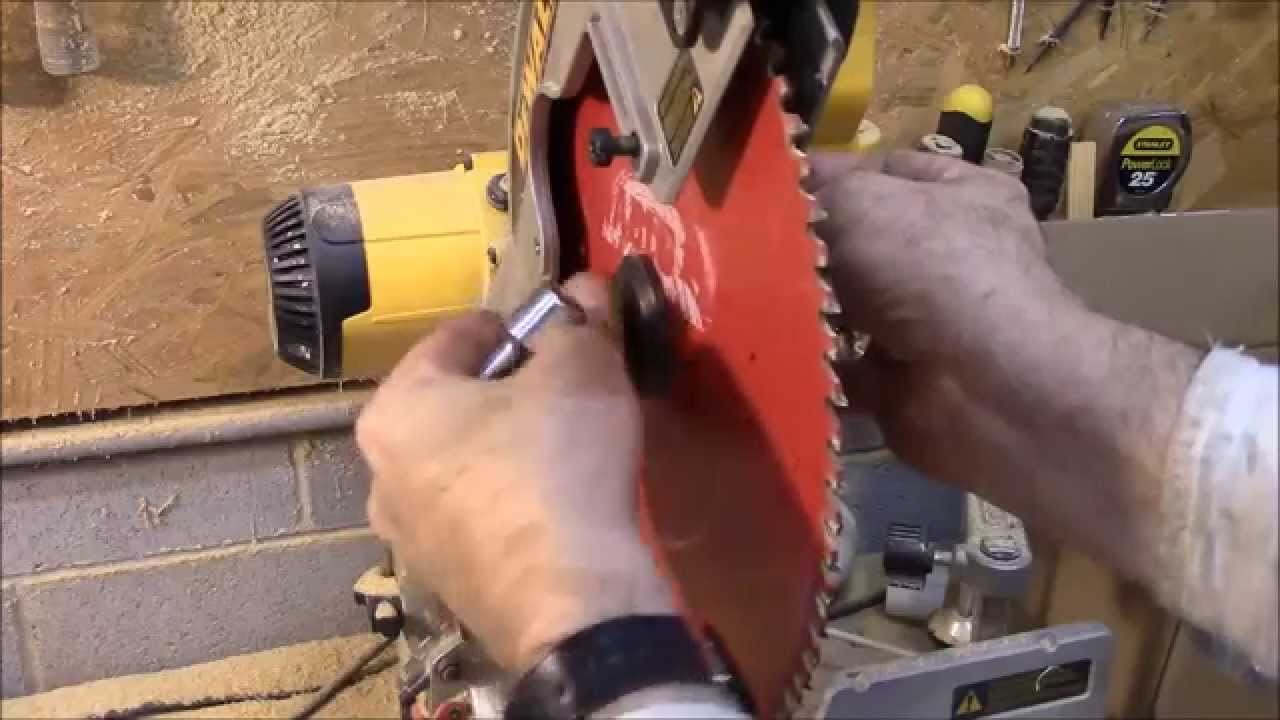
Remove the blade according to the manufacturer’s instructions. Wipe the inner washer, outer washer, arbor shoulder, and blade area with a clean cloth.
For sticky resin, use a cleaner approved for saw blades. Avoid scratching the washer faces. Do not apply oil to parts that need to clamp the blade securely.
4. Reinstall the Blade Correctly
Place the blade flat against the inner washer. Install the outer washer in the correct direction, then fit the arbor nut.
Hold the spindle lock as directed by the manufacturer. Tighten the nut firmly, but do not use an extension pipe or excessive force unless the manual specifically allows it.
5. Test the Blade by Hand
With the saw unplugged, rotate the blade slowly by hand. Watch the teeth against a fixed point on the saw.
This check can reveal obvious side movement. It is only a basic test, though. A blade may look acceptable by hand and still show runout at operating speed.
6. Test With a Known-Good Blade
Install a new, suitable blade that you know is straight. If the wobble disappears, the old blade was the likely cause.
If miter saw blade wobbling continues with a new blade, inspect the arbor, washers, bearings, and housing. At that point, professional service is often the safest choice.

How to Fix Miter Saw Blade Wobbling
The correct fix depends on what the inspection reveals. Do not replace the entire saw before checking the low-cost parts.
Replace a Bent or Damaged Blade
A damaged blade is the most direct repair. Choose a blade with the correct diameter, arbor size, kerf, and maximum speed rating.
The blade’s maximum revolutions per minute must meet or exceed the saw’s rated speed. Use a blade designed for the material and cut type. A fine-finish blade may work well for trim, while a general-purpose blade may suit framing lumber.
Clean or Replace the Washers
Clean washers may solve the problem. Replace them if they are warped, cracked, heavily worn, or damaged around the arbor hole.
Both washers must clamp the blade evenly. Do not mix random washers from another saw.
Tighten the Arbor Nut Properly
A loose arbor nut can cause immediate wobble. Refit the parts and tighten the nut according to the manual.
Remember that many miter saw arbors use a reverse thread. The nut may tighten in the opposite direction from what you expect. Check the manual before turning it.
Repair a Bent Arbor or Worn Bearing
A bent arbor is not a user adjustment. A bearing replacement also requires proper tools and alignment.
Contact the manufacturer, an authorized service center, or a qualified repair technician. Stop using the saw if the motor shaft has visible play, the housing cracks, or the wobble remains after a blade change.
Do Not Use Homemade Fixes
Avoid adding cardboard, tape, extra washers, or random spacers to “center” the blade. These fixes can fail at high speed.
Never grind the arbor, bend the blade, or remove the guard to reduce vibration. A temporary improvement is not worth the risk of a blade failure.

Measuring Blade Runout
For a more exact check, use a dial indicator. This tool measures small movement with a pointer or digital display.
Mount the indicator so its tip touches the flat side of the blade plate. Rotate the blade by hand with the saw unplugged. Record the highest and lowest readings.
The acceptable amount depends on the saw, blade, and manufacturer. There is no single runout number that applies to every model. Use the service limit in the owner’s manual when available.
If you do not have a dial indicator, a simple visual test can still help. Place a fixed pencil tip or wood block near the blade without touching it, then rotate the blade by hand. This will show larger movement, but it cannot replace a proper measurement.

Why Wobbling Damages Cut Quality
Miter saw blade wobbling changes the path of the teeth. Instead of cutting a clean kerf, the blade may scrape and flex against the wood.
This can cause:
• Rough crosscuts
• Fuzzy edges on trim
• Gaps in miter joints
• Splintering on plywood
• Burn marks from extra friction
• Cuts that are not square
• A wider kerf than expected
For example, a picture frame may look accurate at each corner but still have gaps because the blade flexed during the cut. The saw’s angle setting may be correct while the blade path is not.
Wobble also wastes blades. Extra friction creates heat, and heat can dull teeth or weaken the blade’s bond. A clean, stable blade usually cuts faster and needs less feed pressure.

Preventing Miter Saw Blade Wobbling
Good habits reduce both vibration and repair costs. Prevention begins before the blade touches the wood.
• Store blades flat in a dry case
• Keep blade washers clean
• Inspect the arbor before installing a blade
• Use the correct blade size and bore
• Match the blade speed rating to the saw
• Do not force the saw through a cut
• Support long boards on both sides
• Let the blade reach full speed before cutting
• Replace blades with bent plates or missing teeth
• Check fasteners during routine maintenance
Do not drop blades into a tool drawer. Carbide teeth can chip when they strike other tools. A blade case or simple rack protects the plate and teeth.
One lesson I learned the hard way was to check the washers before blaming the blade. A small plug of compressed sawdust sat behind the outer washer. The blade looked straight on the bench, yet it wobbled after installation. Cleaning the washer solved the issue in minutes.

Choosing a Replacement Miter Saw Blade
A new blade will not solve every miter saw blade wobbling problem, but the right blade supports smooth cutting.
Check these specifications:
• Diameter: Use the size listed for your saw.
• Arbor hole: Match the shaft exactly.
• Tooth count: More teeth often give smoother trim cuts, while fewer teeth remove material faster.
• Kerf: Thin kerf blades can reduce waste but may flex more under pressure.
• Material: Carbide tipped blades are common for wood and many composite materials.
• Speed rating: The blade rating must meet or exceed the saw speed.
Avoid very cheap blades with poor flatness or weak construction. Price alone does not guarantee quality, but a trusted blade maker usually provides clear specifications and safety information.
Also consider the material. A blade for clean wood cuts may not suit aluminum, plastic, or fiber cement. Using the wrong blade can increase heat, vibration, and tooth damage.

When to Call a Professional
Some repairs are beyond normal blade maintenance. Get professional help if:
• The wobble remains with a new blade
• The arbor visibly moves from side to side
• The motor makes a grinding sound
• The blade guard does not work correctly
• The saw suffered a fall or hard impact
• The housing has a crack
• The spindle lock does not hold
• You cannot identify the correct replacement part
A service technician can check arbor runout, bearing condition, spindle alignment, and electrical faults. This is especially important for a commercial saw that runs for long periods.
Do not continue testing a damaged saw just to confirm the problem. The cost of a service check is small compared with the cost of an injury, damaged material, or a ruined tool.
Frequently Asked Questions of Miter Saw Blade Wobbling
Why is my miter saw blade wobbling side to side?
The most common causes are a loose arbor nut, dirty blade washers, a bent blade, or a damaged arbor. Unplug the saw and inspect these parts before using it again.
Can a bad blade cause a miter saw to wobble?
Yes. A bent, warped, cracked, or poorly made blade can create visible movement. Test the saw with a straight replacement blade to see whether the problem follows the blade.
How do I know if the miter saw arbor is bent?
Remove the blade and rotate the arbor by hand while watching its end. If the arbor visibly moves, or if a known-good blade still wobbles, the arbor may be bent and should be checked by a qualified technician.
Can I fix a wobbling blade by tightening the nut more?
Only tighten the arbor nut as the owner’s manual directs. Excess force can damage the arbor, washers, or blade, and it will not correct a bent part.
Is a small amount of blade movement normal?
A tiny amount of runout may be within the tool’s design limit, but visible side-to-side movement is a warning sign. Compare the measurement with the manufacturer’s service specification when possible.
Should I use a miter saw if the blade guard works?
No. A working guard does not make a loose, bent, or damaged blade safe. Find and fix the source of the wobble before cutting.
Why does my new blade still wobble?
The problem may come from dirty washers, incorrect installation, the wrong arbor size, a bent arbor, worn bearings, or loose saw parts. Remove the blade and repeat the inspection step by step.
Conclusion
Miter saw blade wobbling usually starts with a simple issue, such as debris behind a washer, a loose arbor nut, or a damaged blade. Unplug the saw, inspect each part, install the blade correctly, and test with a known-good blade before looking for a larger mechanical fault.
Never ignore strong vibration, visible runout, a grinding motor, or a failed blade guard. A few careful minutes can protect your cuts, your tool, and your hands. Use this checklist during your next blade change, and share your own repair experience or questions in the comments.